

Does Mouth Tape Actually Work? The Science Explained
Why a small strip of tape over your lips can change the entire architecture of your night, and what the science really says about who it helps, and who it doesn't.
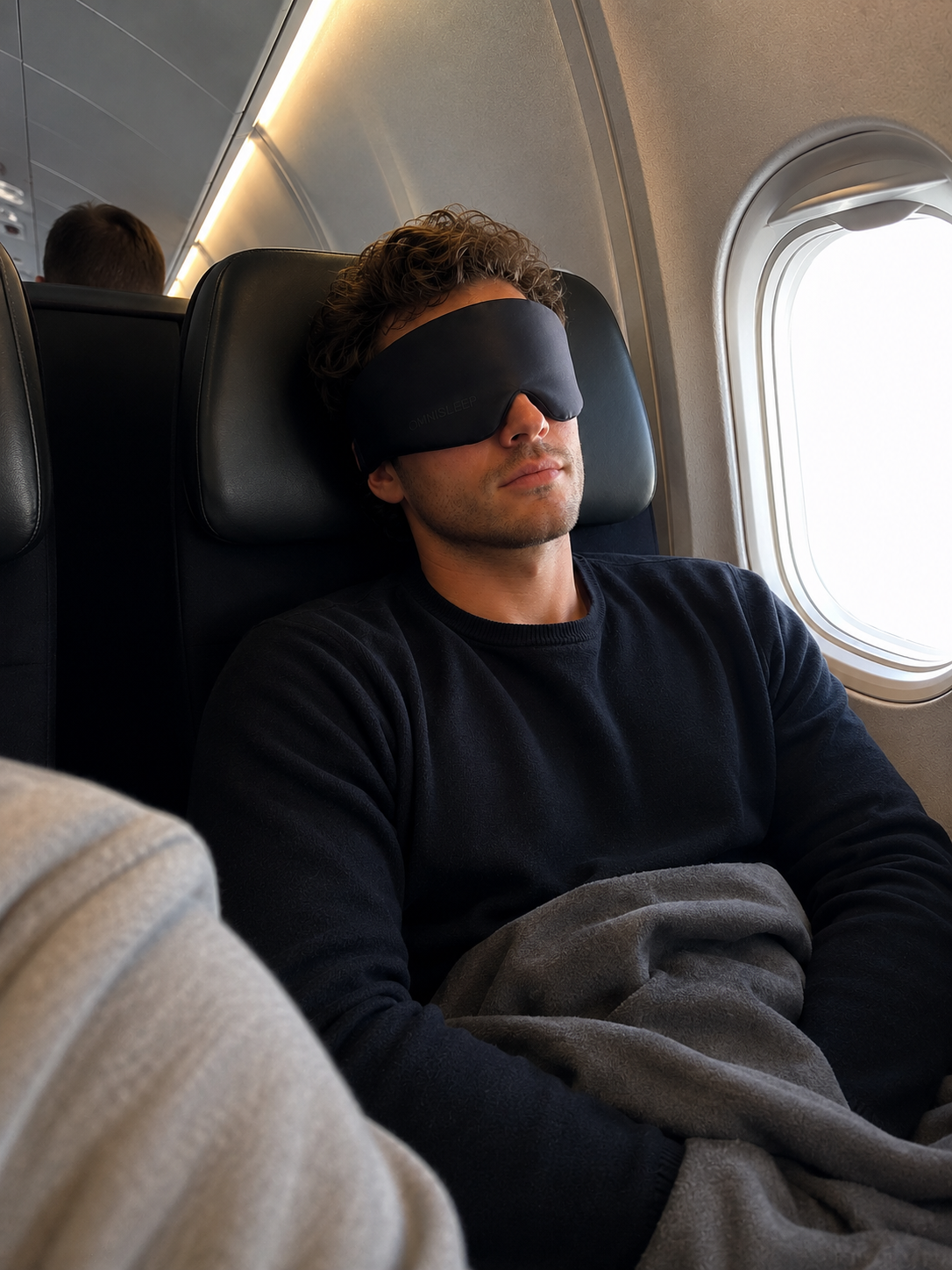
Mouth taping looks a little ridiculous the first time you see it. A grown adult, asleep, with a strip of tape across their lips. And yet it has become one of the most-discussed sleep practices of the last five years, fueled by James Nestor's book Breath, podcasts, and a steady stream of athletes and biohackers reporting better sleep, less snoring, and more energy. The question most people don't stop to ask: what is the actual mechanism, and what evidence is there that any of it works?
This is the honest version. What the research says, and where it stops.
What mouth tape actually does
Mouth tape is exactly what it sounds like: a small, skin-safe adhesive strip that gently holds your lips closed during sleep. It's not designed to seal your mouth shut completely. Most modern versions (silicone or hypoallergenic medical tape) allow you to open your mouth if you really need to. The job of the tape isn't to force anything. It's to remove the default. Without a nudge, many people drift into mouth breathing during sleep without ever knowing it. With the tape, that default flips: nose breathing becomes the path of least resistance.
To understand why that matters, you have to look at what mouth breathing during sleep actually does. And why a growing pile of research suggests that the way you breathe at night might be more important than how many hours you spend asleep.
Mouth breathing vs nose breathing during sleep
When you breathe through your mouth, you bypass almost everything your nose was designed to do. The nose filters, humidifies, and warms incoming air. It generates nitric oxide, a gas that improves oxygen uptake in the lungs and helps neutralize pathogens. It triggers signaling pathways through the vagus nerve that shift your nervous system toward recovery mode.
According to a 2026 narrative review by Amirsadri and Sedighi, published in Behavioral Sciences, nasal breathing influences your immune system, your autonomic nervous system, and even how your brain processes information. The review synthesized around 70 studies and concluded that the nose does far more than move air. It's a sensory and regulatory organ that's deeply tied to how your body recovers and how your brain functions.
Mouth breathing during sleep also has direct mechanical consequences. It narrows the upper airway, which can worsen snoring and contribute to airway collapse. It dries out your oral cavity, increasing the risk of dental caries, gum inflammation, and bad breath. And it disrupts the natural negative pressure that keeps soft tissues in your throat stable, which is part of why chronic mouth breathers often wake up feeling unrested even after a full night's sleep.
Your brain knows the difference
Perhaps the most striking finding from recent research: your brain literally synchronizes its rhythmic activity to your breathing, but only when you breathe through your nose. A landmark 2016 study by Zelano and colleagues in the Journal of Neuroscience used intracranial recordings in epilepsy patients and found that nasal breathing entrains oscillations in the piriform cortex, amygdala and hippocampus, three core regions for emotion and memory. The effect concentrated in the inhalation phase, and it disappeared during mouth breathing.
A follow-up study from 2019 by Perl and colleagues showed that participants spontaneously initiated cognitive tasks during nasal inhalation, and their visuospatial performance was measurably better in those moments.
This is one of the strongest arguments for protecting nasal breathing at night. If your brain consolidates memory and processes emotion during sleep, and it does so more effectively while you're breathing through your nose, then 7 hours of mouth-breathing sleep is not the same as 7 hours of nose-breathing sleep.
What the research on mouth tape itself shows
Now the harder part. The case for nasal breathing is robust. The case for mouth tape specifically as a tool to enforce that nasal breathing is more limited. Honest version: the evidence base is small, the studies are mostly small, and definitive clinical guidelines don't yet exist.
A 2024 scoping review by Fangmeyer and colleagues identified only nine studies that specifically evaluated mouth taping during sleep. That's a tiny evidence base compared with established sleep interventions. But within those studies, two patterns do emerge.
1. Mild obstructive sleep apnea
The most cited study is a 2022 paper by Lee and colleagues from Chang Gung Memorial Hospital in Taiwan, published in Healthcare. Twenty mouth-breathing patients with mild OSA had their mouths taped with hypoallergenic silicone tape for one week. They were tested with a home sleep test before and after.
The results were notable. The median apnea-hypopnea index dropped from 8.3 to 4.7 events per hour, a 47 percent reduction. Snoring index dropped by 47 percent. Oxygen desaturation index improved significantly. Of the 20 participants, 13 (65 percent) were classified as responders, meaning they had at least a 50 percent reduction in snoring.
It's a small study without a control group. But the effect size is large, and the mechanism is plausible: shifting from mouth breathing to nose breathing narrows the airway less, generates more negative pressure stability, and reduces the conditions that cause vibration and obstruction.
2. Snoring without apnea
For simple snorers (people who snore but don't have OSA), the evidence is even thinner but pointing in a similar direction. Small studies have shown reductions in snoring volume and improvements in partner-reported sleep quality. A larger ongoing trial at Johns Hopkins (MTASSA) is specifically investigating mouth tape for snoring and mild OSA, with both subjective and objective measurements. The early hypothesis is that closing the mouth shifts the airway geometry in a way that reduces tissue vibration in the throat.
What the research doesn't yet prove
This part matters, and we'll say it clearly. Mouth tape is not a clinically proven treatment for moderate or severe sleep apnea. A 2024 review identified that current research only supports its potential use in mild OSA, as an adjunct with mandibular advancement devices, or alongside CPAP in selected patients. It is not a replacement for any of those.
The broader claims you see on social media (massive boosts in athletic performance, immune function, jawline reshaping, deeper sleep across the board) are not yet supported by controlled clinical evidence. There is a plausible biological case for some of these. There is no controlled trial proving them.
That doesn't mean mouth tape doesn't help. Many users report meaningful improvements in their morning energy, dry mouth, and partner-reported snoring. It does mean we present it for what it actually is: a low-cost, low-risk tool that supports nasal breathing during sleep, with promising but limited clinical evidence.
What mouth tape is not
This part is non-negotiable. A few situations where mouth tape is the wrong tool:
- It is not for people who can't breathe through their nose. If your nose is chronically blocked from a deviated septum, severe allergies, or congestion, taping your mouth shut is not the answer. Address the nasal obstruction first.
- It is not a treatment for moderate or severe sleep apnea. If you have diagnosed OSA, mouth tape may be used alongside CPAP under medical guidance, but it does not replace it.
- It is not for use under the influence. Alcohol, sedatives, or anything that depresses your breathing reflex makes mouth taping risky. Same applies to acute illness with nasal congestion.
- It is not for children without medical supervision. Pediatric mouth breathing is often a sign of an underlying issue (enlarged adenoids, tonsils, structural problems) that needs evaluation, not taping.
- It is not a quick fix. Most users need a few nights to adjust. If it consistently feels uncomfortable or causes anxiety, it's not the right tool for you.
The simple rule: if you can comfortably breathe through your nose for three minutes while awake with your mouth gently closed, you're likely a candidate. If not, fix the nose first.
How OMNIAIR thinks about it
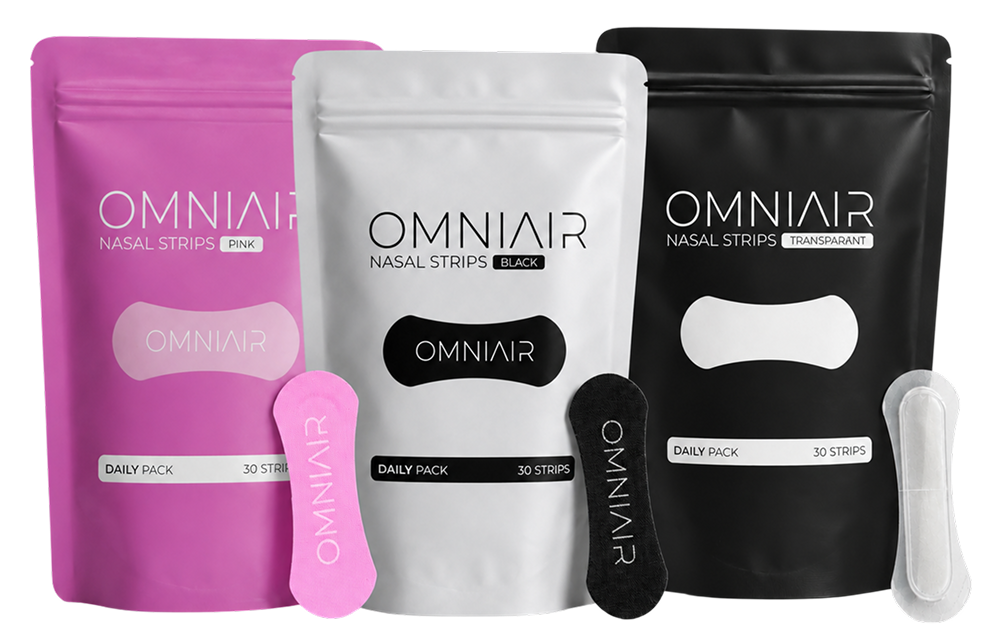
OMNIAIR started with breathing, because breathing is the foundation. Nasal strips during the day. Mouth tape at night. Both tools serve the same underlying principle: keep nasal breathing the default, especially when your body is unconscious and can't choose for itself.
The world is saturated with content about pushing harder. Train more, work later, sleep less. The data, and the experience of every athlete operating at the top of their game, points in the other direction. Recovery is where the actual progress happens. And recovery starts with how you breathe at night.
Our Mouth Tape uses a hypoallergenic, gentle adhesive that holds the lips closed without forcing them shut. The tape is designed to be removed easily, even mid-sleep. We don't market it as a miracle. We market it as what it is: a simple mechanical tool that protects your default breathing pattern at the moment your body needs that pattern the most.
How to use mouth tape
- Test nose breathing first: close your mouth and breathe only through your nose for three minutes while awake. If that's comfortable, you're ready. If not, address the nasal obstruction first.
- Start with short sessions: a nap, an early hour of sleep. Not eight hours from night one. Build up over a week or two.
- Clean, dry skin: a small mustache or chapped lips can interfere with adhesion. A thin layer of balm beforehand can help, but avoid heavy oils.
- Position: centered over the lips, not pulled tight. The tape should hold them gently closed, not seal them shut.
- Pair with the basics: dark room, cool temperature, no screens before bed. Mouth tape works best as one layer on top of the sleep fundamentals, not as a fix for them.
- Listen to your body: if you wake up with the tape removed, that's your body telling you something. Don't fight it. Investigate why.
The short version
Mouth taping protects nasal breathing during sleep. The case for nasal breathing is well established: more nitric oxide, better autonomic balance, brain oscillations that synchronize with your inhalation, and a measurably different cognitive and physiological state the next morning.
The case for mouth tape specifically is smaller but pointing in a useful direction. Small studies in mild OSA show meaningful reductions in apnea-hypopnea index and snoring. For simple snorers, the early data is promising. For broader claims, we wait for better evidence.
It is not a treatment for serious sleep disorders. It is not for people whose noses don't work. It is a low-cost, low-risk tool for shifting your default during sleep from mouth to nose. And if you're already convinced that how you breathe matters, this is the cheapest, simplest intervention you can layer on top of everything else.
Breathing well at night is the start of recovering well the next day.
Disclaimer: OMNIAIR products are not medical devices and are not intended to diagnose, treat, cure or prevent any medical condition. If you have a medical condition or health concern, consult a qualified healthcare professional. Do not use mouth tape if you have moderate or severe sleep apnea, severe nasal obstruction, or are under the influence of alcohol or sedatives.
Sources
- Lee, Y.C., Lu, C.T., Cheng, W.N., Li, H.Y. (2022). The Impact of Mouth-Taping in Mouth-Breathers with Mild Obstructive Sleep Apnea: A Preliminary Study. Healthcare, 10(9), 1755. https://pmc.ncbi.nlm.nih.gov/articles/PMC9498537/
- Fangmeyer, A., et al. (2024). Nocturnal mouth-taping and social media: A scoping review of the evidence. American Journal of Otolaryngology. https://www.sciencedirect.com/science/article/pii/S0196070924003314
- Amirsadri, A., Sedighi, H. (2026). Know Your Nose: A Narrative Review of the Developmental and Functional Impact and Importance of the Nose, Nasal Breathing and Techniques on Health and Emotional Wellbeing. Behavioral Sciences, 16(3), 467. https://doi.org/10.3390/bs16030467
- Zelano, C., et al. (2016). Nasal Respiration Entrains Human Limbic Oscillations and Modulates Cognitive Function. Journal of Neuroscience, 36(49), 12448 to 12467. https://www.jneurosci.org/content/36/49/12448
- Perl, O., et al. (2019). Human non-olfactory cognition phase-locked with inhalation. Nature Human Behaviour, 3, 501 to 512.
- Zaccaro, A., et al. (2018). How Breath-Control Can Change Your Life: A Systematic Review on Psycho-Physiological Correlates of Slow Breathing. Frontiers in Human Neuroscience, 12, 353. https://doi.org/10.3389/fnhum.2018.00353
- Mouth Tape for Snoring and Sleep Apnea (MTASSA) Trial. Johns Hopkins Medicine. https://www.hopkinsmedicine.org/clinical-trials/results/irb00425791
Ready to upgrade your recovery?
Science-backed tools, built for athletes who take recovery seriously.
Shop OMNIAIR