

Sauna and Heat Therapy, Explained by the Science
What decades of Finnish research actually show about heat, the heart, the brain and endurance. And where the evidence stops.
The sauna has been sold to us twice. First as a place to sweat out a hangover, then as a longevity hack with a stopwatch and a heart rate monitor. Both versions skip the interesting part: heat is a stressor, and your body treats it like one.
That is the whole mechanism. Everything else follows from it. Here is what the research says, without the hype.
What heat therapy actually is
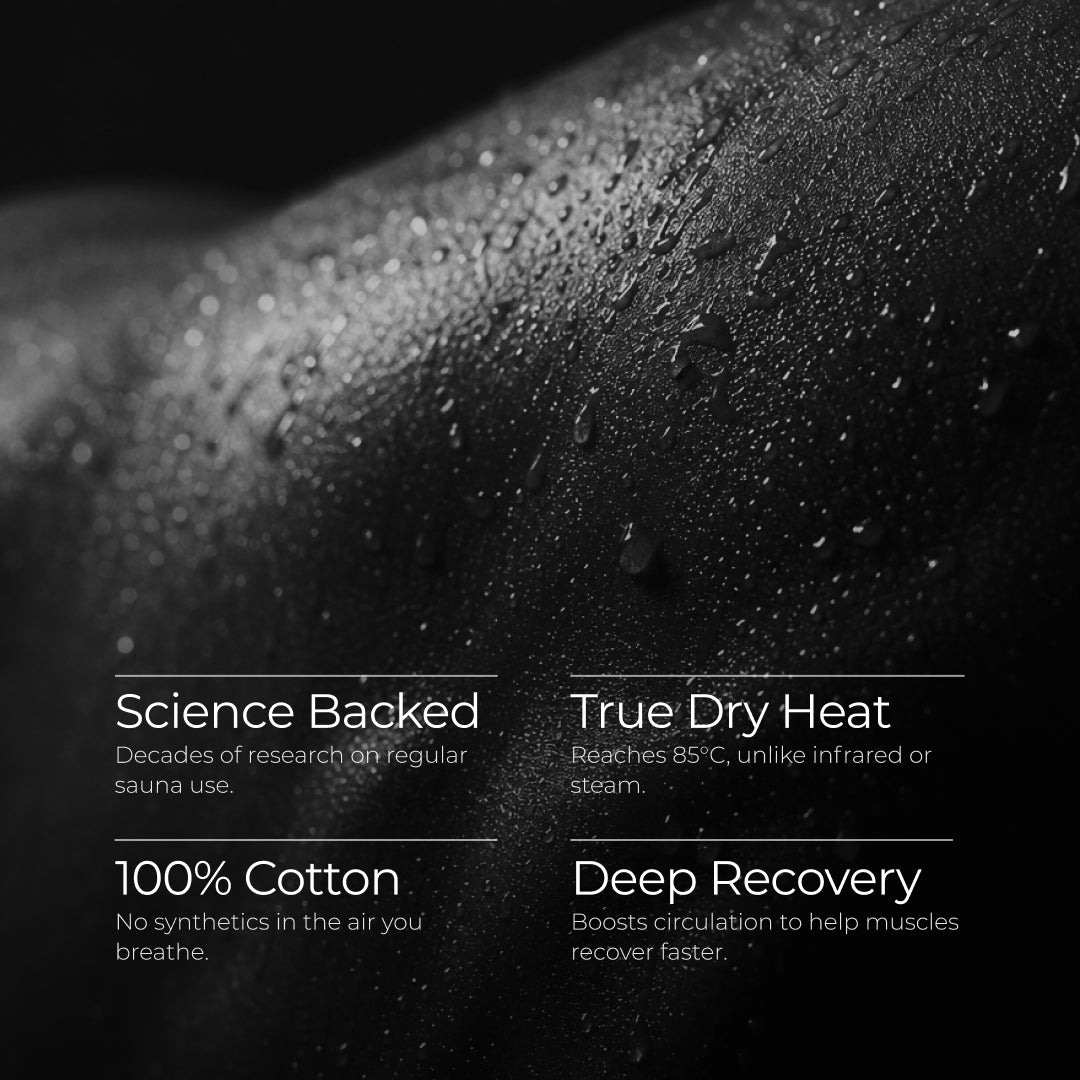
Heat therapy, or thermal therapy, means deliberately raising your body temperature for a short, controlled period. Traditional Finnish saunas do this with dry air, usually between 70 and 100 degrees Celsius at low humidity. Steam rooms use lower temperatures and near-total humidity. Infrared cabins work differently again, warming your body directly rather than heating the air around it.
The distinction matters when you read studies. Almost all of the strong long-term research comes from traditional dry Finnish saunas, not infrared. When someone cites the Finnish longevity data to sell you an infrared cabin, they are borrowing evidence from a different intervention.
The principle is the same one behind cold exposure and behind training itself: hormesis. A controlled stressor that your body adapts to, coming back slightly more robust than before.
The mechanism, what heat does to your body
Sit in a hot room and your core temperature starts climbing within minutes. Your body responds on several fronts at once.
- Cardiovascular load. Blood vessels near the skin dilate to dump heat, blood pressure drops, and your heart rate climbs to compensate. In a moderate session heart rate reaches roughly 100 beats per minute, and in a hot session considerably higher. That range overlaps with low to moderate intensity exercise, which is why sauna sessions are sometimes described as passive cardiovascular training.
- Plasma volume expansion. Repeated heat exposure signals the body to hold more fluid in the bloodstream. More plasma means more blood volume, and more blood volume means each heartbeat moves more oxygen.
- Heat shock proteins. Heat triggers a family of molecular chaperones that help proteins fold correctly and clear out damaged ones. This is one of the most cited mechanisms behind the longevity findings, and also the least directly proven in humans.
- Nervous system shift. The session itself is sympathetic, meaning stress and arousal. The period afterwards swings the other way, which is why people describe the post-sauna state as deeply calm rather than energised.
Temperature and time matter
Heat follows a dose response, and the Finnish data is unusually specific about it because researchers recorded both how often and how long people used the sauna.
- Temperature: most of the research is based on traditional saunas in the 80 to 90 degree range.
- Duration: sessions of roughly 15 to 20 minutes are typical in the studies, and longer sessions showed stronger associations than very short ones.
- Frequency: this is where the effect concentrates. The differences between once a week and four or more times a week are far larger than the differences in session length.
What the research shows, four areas
Most of the long-term evidence comes from one remarkable dataset: the Kuopio Ischaemic Heart Disease Risk Factor Study, which followed thousands of Finnish men for over two decades. That is a strength and a limitation, and we will come back to why.
1. Cardiovascular health and mortality
The landmark paper is Laukkanen et al. (2015) in JAMA Internal Medicine. Researchers followed 2,315 middle-aged men for a median of nearly 21 years and grouped them by sauna frequency.
Compared with men who used a sauna once a week, those who went four to seven times a week had substantially lower rates of fatal coronary heart disease, fatal cardiovascular disease and all-cause mortality. The trend was consistent across every outcome measured, and longer sessions were associated with lower risk than shorter ones.
A later study extended this to women. Laukkanen and colleagues (2018), published in BMC Medicine, followed 1,688 participants with an average age of 63, just over half of them women. Cardiovascular mortality decreased steadily as weekly sauna sessions increased, with no obvious cut-off point.
2. The brain
Using the same Finnish cohort, Laukkanen et al. (2017) in Age and Ageing looked at memory disease. Among the 2,315 men, 204 were later diagnosed with dementia and 123 with Alzheimer's disease.
Men using a sauna four to seven times a week had roughly two thirds lower risk of both dementia and Alzheimer's compared with once-weekly users. That is a striking number, and it deserves a striking caveat: this is an observational association, not a demonstrated cause.
3. Endurance performance
This is the one area with a controlled experiment rather than a population study. Scoon et al. (2007), in the Journal of Science and Medicine in Sport, had six competitive male distance runners sit in a sauna at about 90 degrees for around 30 minutes immediately after training, roughly 13 times over three weeks.
Relative to the control period, run time to exhaustion increased by 32 percent, which the authors estimated as close to a 2 percent improvement in an actual endurance time trial. Plasma volume rose by 7.1 percent, and the change in performance tracked closely with the change in blood volume.
Six runners is a very small study, so treat the exact numbers loosely. But the mechanism is clean and it matches what heat acclimation research shows elsewhere: heat expands blood volume, and blood volume drives endurance.
4. Recovery and how it feels
This is the honest weak spot. The subjective effects of sauna are obvious to anyone who uses one: muscles loosen, sleep tends to come easier, stress drops away. The controlled evidence for sauna as a muscle recovery tool is much thinner than the cardiovascular data, and thinner than the cold water immersion evidence for soreness.
What can be said fairly: heat increases blood flow to muscles and tissue, the post-session parasympathetic swing supports relaxation and sleep onset, and consistency matters more than any single session.
What sauna is not
The Finnish data is genuinely impressive, and it is also the reason to be careful.
- It is observational. These studies show association, not causation. Men who sauna four to seven times a week may differ from once-a-week users in ways no statistical adjustment fully captures: more leisure time, more social contact, better baseline health. The researchers adjusted for many factors, but you cannot adjust for everything.
- It is heavily Finnish and heavily male. Sauna is woven into daily life there in a way it is not elsewhere, and the largest study included only men.
- Alcohol and sauna is a genuinely dangerous combination. This is not a caveat to skim. Alcohol plus heat impairs the body's ability to regulate temperature and blood pressure, and it features in a meaningful share of sauna-related deaths.
- Not for everyone. If you have unstable angina, have had a recent heart attack, have severe aortic stenosis, are pregnant, or have low blood pressure that already causes symptoms, speak to a doctor first.
- Hydration is not optional. You will lose fluid, and the fluid needs to come back.
Hot, cold, or both
Contrast therapy, alternating sauna and cold plunge, is popular and intuitively appealing. The honest position is that the two interventions each have their own evidence base, and the case that combining them beats either one alone is not well established.
One practical note worth repeating from our piece on cold therapy: cold water immersion straight after strength training can blunt muscle growth. Heat does not carry that same well-documented problem, which makes sauna the more sensible choice on lifting days if you want one of the two.
If you want both in your week, the simplest approach is to keep them separate: sauna on strength days, cold on rest or endurance days, and contrast sessions when you simply enjoy them.
How OMNIAIR thinks about it
Heat, cold and light are the three levers of a recovery practice, and we have now written up the evidence for each. Sauna is arguably the one with the deepest long-term dataset behind it.
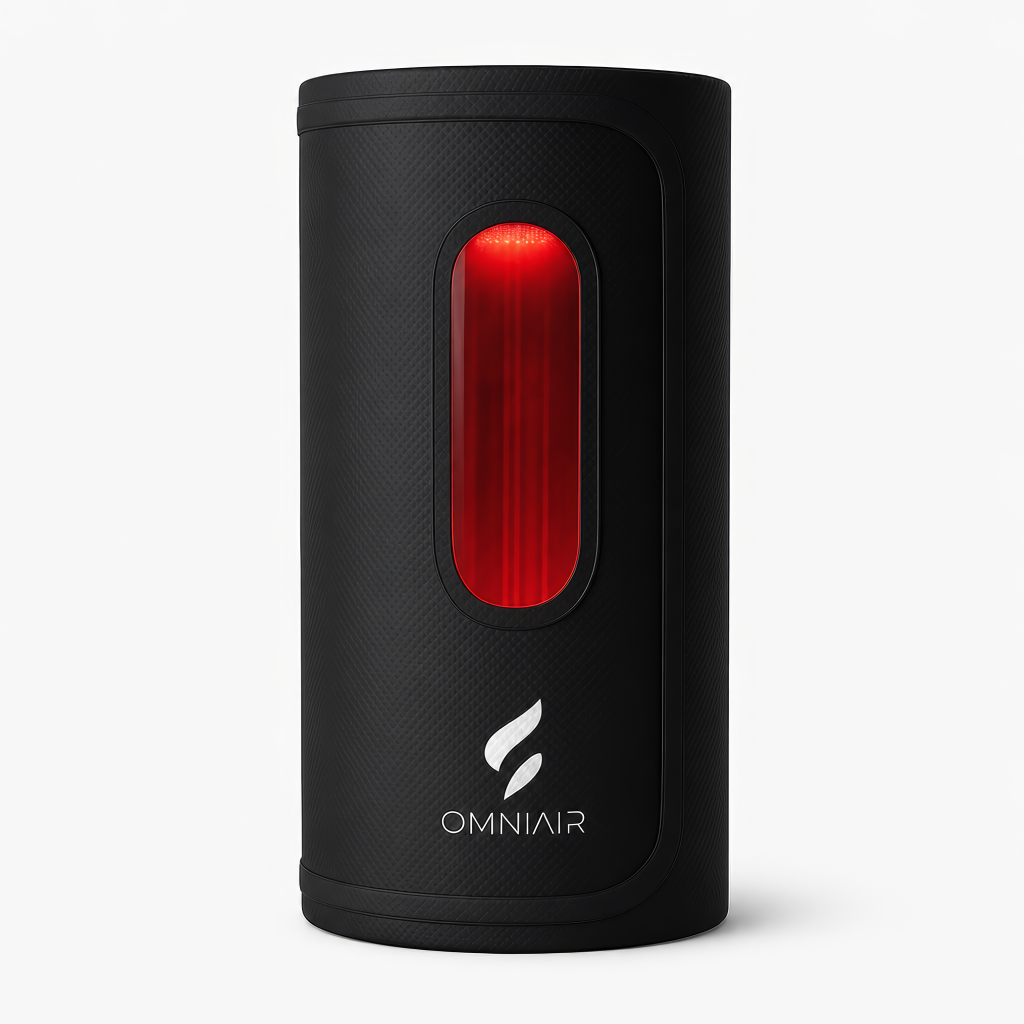
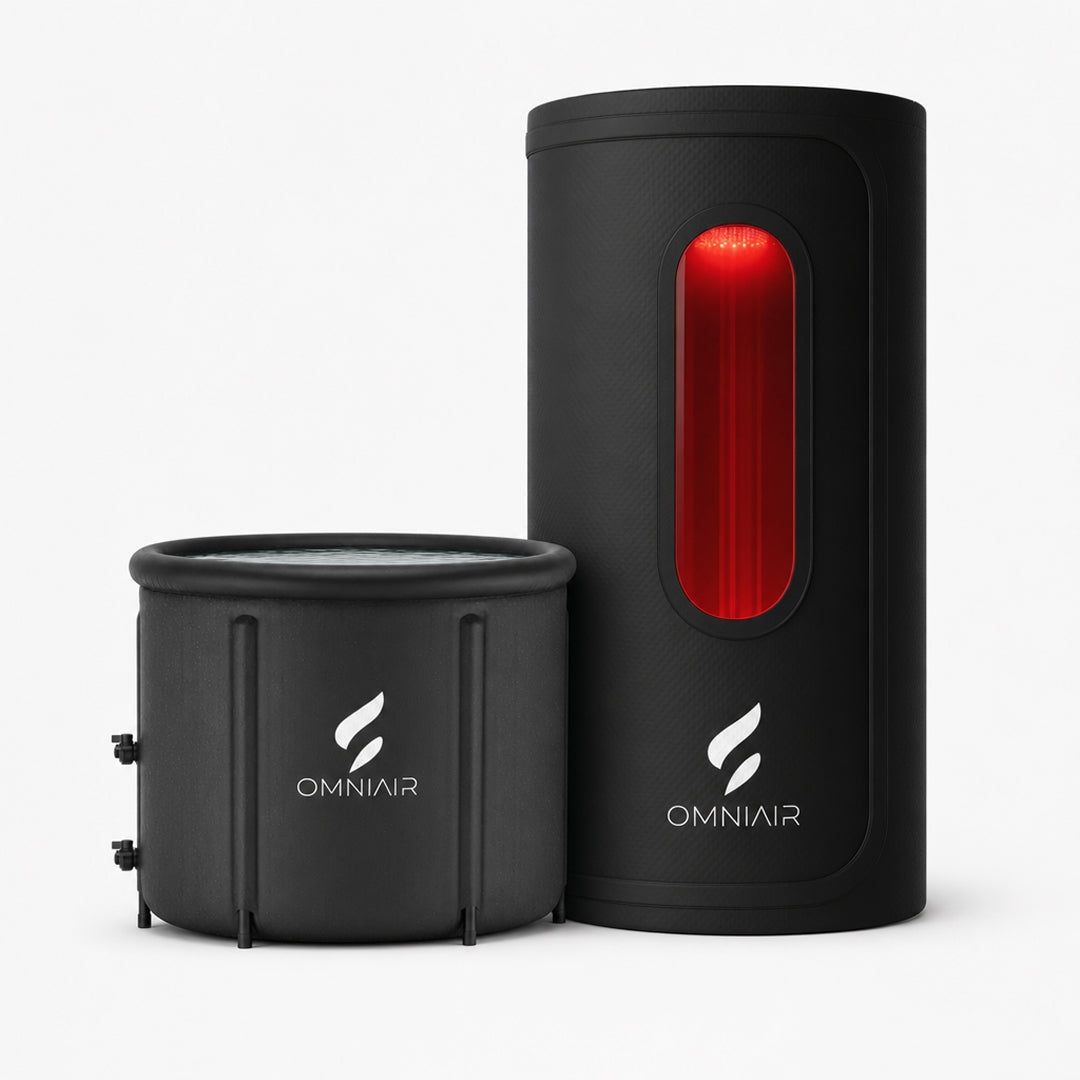
The barrier has never been interest, it has been access. A traditional sauna means a gym membership, a construction project, or a wooden cabin you do not have room for. Our Home Sauna Pod exists to remove that barrier: real dry heat up to 85 degrees, no steam and no infrared, made from cotton rather than synthetic materials, and small enough to live in an apartment. If you want heat and cold together, the Hot and Cold Recovery Bundle pairs it with the ice bath.
Because with sauna, the research is unusually clear on one point: frequency is what matters. The gap between once a week and four times a week is where nearly all of the effect lives. A sauna you can actually use several times a week beats a better one you visit occasionally.
How to use heat therapy
- Temperature: 70 to 90 degrees for a traditional dry sauna. You do not need to chase the top end.
- Duration: 15 to 20 minutes per session once you are used to it. Start shorter and build.
- Frequency: this is the lever that matters most. Three to four sessions per week is where the research gets interesting.
- Timing: after training suits endurance adaptation. In the evening it supports the natural temperature drop that helps sleep onset, so finish an hour or two before bed rather than immediately before.
- Hydration: drink before and after. Replace what you lose.
- Alcohol: never combine the two.
The short version
Heat raises your core temperature and forces your cardiovascular system to work, which over time expands blood volume, improves vascular function and triggers cellular repair processes. Two decades of Finnish data link frequent sauna use to lower cardiovascular and all-cause mortality and to lower rates of dementia, and a small controlled trial shows a clear endurance benefit through plasma volume expansion.
The evidence is observational for the longevity claims and experimental for the performance ones. It is not a treatment, and it is not a substitute for training, sleep and nutrition. Used consistently, it is one of the best-supported recovery habits available.
Recovery is the missing piece.
Disclaimer: Our sauna pod is not a medical device and is not intended to diagnose, treat, cure or prevent any medical condition. Sauna use carries risks for people with cardiovascular conditions, for pregnant women, and in combination with alcohol. If you have a health concern, consult a qualified healthcare professional before starting.
Sources
- Laukkanen, T., Khan, H., Zaccardi, F., & Laukkanen, J.A. (2015). Association Between Sauna Bathing and Fatal Cardiovascular and All-Cause Mortality Events. JAMA Internal Medicine, 175(4), 542 to 548. https://pubmed.ncbi.nlm.nih.gov/25705824/
- Laukkanen, T., Kunutsor, S., Kauhanen, J., & Laukkanen, J.A. (2017). Sauna bathing is inversely associated with dementia and Alzheimer's disease in middle-aged Finnish men. Age and Ageing, 46(2), 245 to 249. https://pubmed.ncbi.nlm.nih.gov/27932366/
- Scoon, G.S.M., Hopkins, W.G., Mayhew, S., & Cotter, J.D. (2007). Effect of post-exercise sauna bathing on the endurance performance of competitive male runners. Journal of Science and Medicine in Sport, 10(4), 259 to 262. https://pubmed.ncbi.nlm.nih.gov/16877041/
- Laukkanen, J.A. and colleagues (2018). Sauna bathing is associated with reduced cardiovascular mortality and improves risk prediction in men and women: a prospective cohort study. BMC Medicine, 16, 219. https://link.springer.com/article/10.1186/s12916-018-1198-0

Bereit für bessere Regeneration?
Wissenschaftlich fundierte Lösungen für Athleten, die Regeneration ernst nehmen.
OMNIAIR entdecken