
Nasal Strips for HYROX: What the Science Says About Breathing on Race Day
HYROX peak heart rate hits 185 bpm. Blood lactate climbs to 8.5 mmol/L. Your respiratory system runs at 80%+ of max for 86 minutes straight. Here's where nasal strips actually help, where they don't, and what the research really shows.
HYROX is the most measured fitness race on the planet right now. Eight one-kilometre runs. Eight stations. A 2025 study in Frontiers in Physiology tracked recreational HYROX athletes through a simulated competition and found something specific: athletes spent most of the race at "very hard" intensity, above 80% of maximum heart rate, with peak heart rates around 185 bpm and blood lactate reaching 8.5 mmol/L on stations. The race lasts roughly 86 minutes. That's 86 minutes of your cardiorespiratory system holding the line.
Which is exactly why "HYROX nasal strips" has become one of the most searched race-day gear terms in functional fitness. The question this blog answers: does the research actually support using nasal strips for HYROX, or is it just another marketing trend?
This is the honest version. What the science says. Where it stops. And where nasal strips genuinely fit into a HYROX race-day strategy.
The HYROX breathing problem
HYROX is a unique respiratory challenge. Unlike a marathon, you can't settle into a steady rhythm. Unlike a CrossFit workout, you can't stop after 12 minutes. Every 1km run is followed by a station that spikes your heart rate and blood lactate even higher. Then you're back on the run. Eight times.
This is what makes HYROX physiologically brutal. The 2025 Frontiers in Physiology study by Schramm and colleagues, the first peer-reviewed analysis of HYROX physiological demands, found that performance correlates more strongly with aerobic capacity than maximum strength. In other words: HYROX is won by athletes who manage their breathing and heart rate better, not by athletes who can lift the most.
The challenge for almost every HYROX athlete is the same. Somewhere between Run 1 and Run 3, breathing shifts from controlled to ragged. You hit the SkiErg already gasping. Mouth breathing takes over. Heart rate refuses to settle in the 60 to 90 seconds after each station. By Run 5, you're in damage control. The race is being lost.
Coaches across the HYROX world all say a version of the same thing: if you can't control your breathing, you can't control your pace. Which makes the way you breathe before, between and during your race the single most underrated performance lever you have.
The science of nasal vs oral breathing under load
Here's where most HYROX nasal strip blogs go wrong: they claim "40% more airflow" without citing a source. That number doesn't appear in any peer-reviewed study we could find. So let's look at what the research actually shows.
A 2017 study by LaComb and colleagues in the International Journal of Kinesiology and Sports Science had 19 trained runners complete treadmill runs at 50%, 65%, and 80% of their VO2max under two conditions: oral breathing only and nasal breathing only. The findings were specific.
At 65% and 80% of VO2max, nasal breathing was significantly more efficient than oral breathing. The ventilatory equivalents for oxygen and carbon dioxide (VE/VO2 and VE/VCO2) were both lower with nasal breathing. In plain terms: at moderate to moderate-high intensity, the respiratory system did less work per unit of oxygen delivered.
What does that mean for HYROX? The 1km runs between stations sit roughly in this 65 to 80% VO2max zone for most amateur athletes. A 2018 study by Dallam and colleagues on recreational runners trained in nasal breathing found similar results: at submaximal intensities, nasal breathing delivered equivalent VO2max with significantly better ventilatory efficiency. The runners used less air for the same oxygen uptake.
For HYROX specifically, this matters because the 1km runs are recovery opportunities. The athletes who recover most efficiently between stations are the ones who finish fast.
Now the honest part. At maximum intensity, the research is clear: oral breathing wins on volume. Morton's 1995 study found a 35% drop in peak ventilation when athletes were forced to breathe nasally during maximum effort. So during a Sled Push or the final reps of Wall Balls, expecting to keep your mouth closed is unrealistic and counterproductive. The mouth opens. That's biology.
Why nasal breathing protects more than oxygen delivery
Beyond ventilation efficiency, nasal breathing influences your nervous system in ways that directly impact HYROX performance. A 2018 systematic review by Zaccaro and colleagues in Frontiers in Human Neuroscience analyzed dozens of studies and concluded that slow, controlled nasal breathing activates the parasympathetic nervous system, increases heart rate variability, and lowers perceived stress.
For HYROX, this is critical. The 60 to 90 second window after each station is where the race is won or lost. Most coaches agree on this. Settling your heart rate in that window means you arrive at the next run with a sustainable engine. Failing to settle it means you compound fatigue station after station until you blow up.
Nasal breathing accelerates that recovery process. Faster vagal nerve stimulation. Better parasympathetic activation. Calmer chest, quieter mind. A 2026 narrative review by Amirsadri and Sedighi in Behavioral Sciences synthesised 70 studies on nasal breathing and concluded that nitric oxide produced in the sinuses (which can reach concentrations of up to 30,000 parts per billion) improves pulmonary oxygenation by up to 18% in some studies. When you mouth breathe, you skip this entire system.
For a HYROX athlete pushing 80%+ of max heart rate for 86 minutes, having access to better oxygen uptake and faster parasympathetic recovery isn't a luxury. It's a measurable competitive edge.
Where a nasal strip actually fits in
So we've established two things. Nasal breathing is more efficient at the intensities you spend most of HYROX in. And nasal breathing has nervous system benefits that improve between-station recovery.
The problem is anatomical. Roughly 50 to 60% of total airway resistance sits in a small area called the nasal valve, just inside your nostrils. That's the bottleneck. When you're pushing hard, the soft tissues around the nasal valve can collapse inward, making nasal breathing physically harder and forcing your body to default to mouth breathing earlier than it needs to.
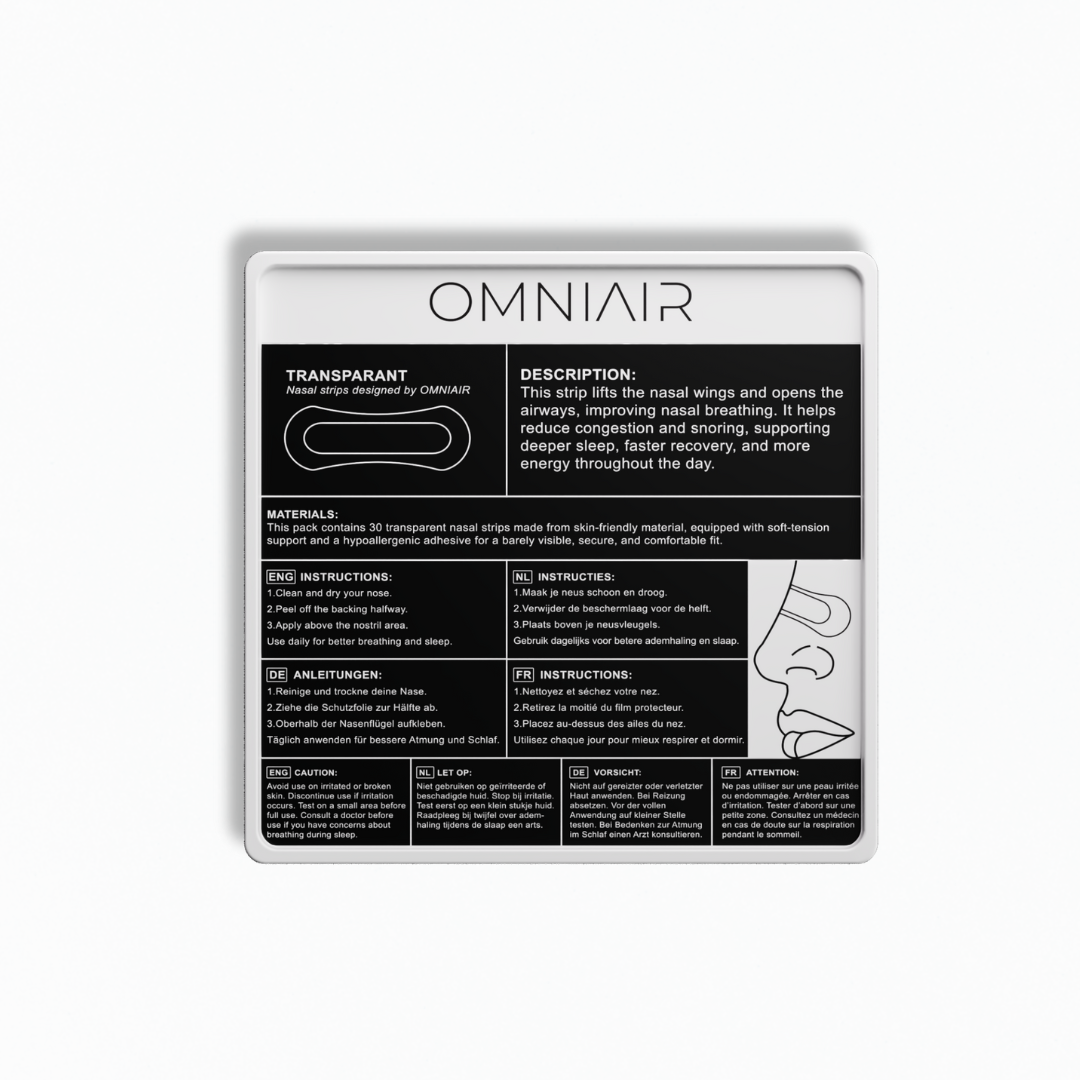
This is where an external nasal dilator earns its place. A clinical study by Roithmann and colleagues in The Laryngoscope used acoustic rhinometry to measure exactly what a nasal strip does: it significantly increases the minimum cross-sectional area of the nasal valve and reduces airflow resistance. A 2000 study by Kirkness and colleagues in the European Respiratory Journal showed the same mechanism: the springy bands in the strip stabilise the lateral nasal walls so they don't collapse during forceful inhalation.
Translation for HYROX: a nasal strip doesn't add anything to your physiology. It removes a mechanical barrier so you can use the nasal breathing you already have, for longer, under more load.
How HYROX athletes use nasal strips, station by station
This is the practical part. Here's where nasal strips actually fit into a HYROX race day, and where they don't.
Runs 1 and 2: Setting the rhythm
The first two runs are where most HYROX races are lost. Adrenaline. Excitement. Pace creeping up. A nasal strip during these runs supports rhythmic nasal breathing through your aerobic threshold, helping you stay in the moderate-high VO2max zone where nasal breathing is more efficient than oral. Classic coaching advice: inhale for 3 strides, exhale for 3. The strip makes this easier when your nose is even slightly congested or your nasal valve is collapsing.
Transitions and the Roxzone
This is where the strip's nervous system effect matters most. As you exit a station and enter the run, those 60 to 90 seconds of heart rate settling determine your arrival state at the next station. Nasal breathing here activates the parasympathetic system faster than mouth breathing. The strip keeps that channel open precisely when your body is trying to default to gasping.
High-intensity stations (SkiErg, Sled, Wall Balls)
Honest version: you will mouth breathe through these. That's appropriate. The strip doesn't change that. What it does do is help you return to nasal breathing the moment the station ends, instead of staying in oral breathing all the way through the next run. That recovery speed matters more than people realise.
Lower-intensity stations (Farmers Carry, Lunges)
For most HYROX athletes, these stations sit within a range where nasal breathing is actually sustainable. With a strip helping keep airflow open, you can maintain controlled nasal breathing through significant portions of these movements, conserving the respiratory cost for later.
The OMNIAIR HYROX protocol
How to integrate nasal strips into a HYROX race day, based on what the research supports and what athletes report in practice:
- Apply 20 to 30 minutes before warm-up. Clean, dry skin. No oil-based moisturisers. Let the adhesive bond before you start sweating.
- Train with them. Wear them in your HYROX simulations. Your body needs to associate nasal breathing with the load you're going to put on it. Race day is not the time to first try it.
- Use them as a breath-tracking tool. If you notice you're mouth breathing earlier than expected, that's data. Either you're going too hard or your pacing needs work.
- Don't expect them to keep your mouth closed at max intensity. They're not designed to. The mouth opens during Wall Balls. That's biology, not failure.
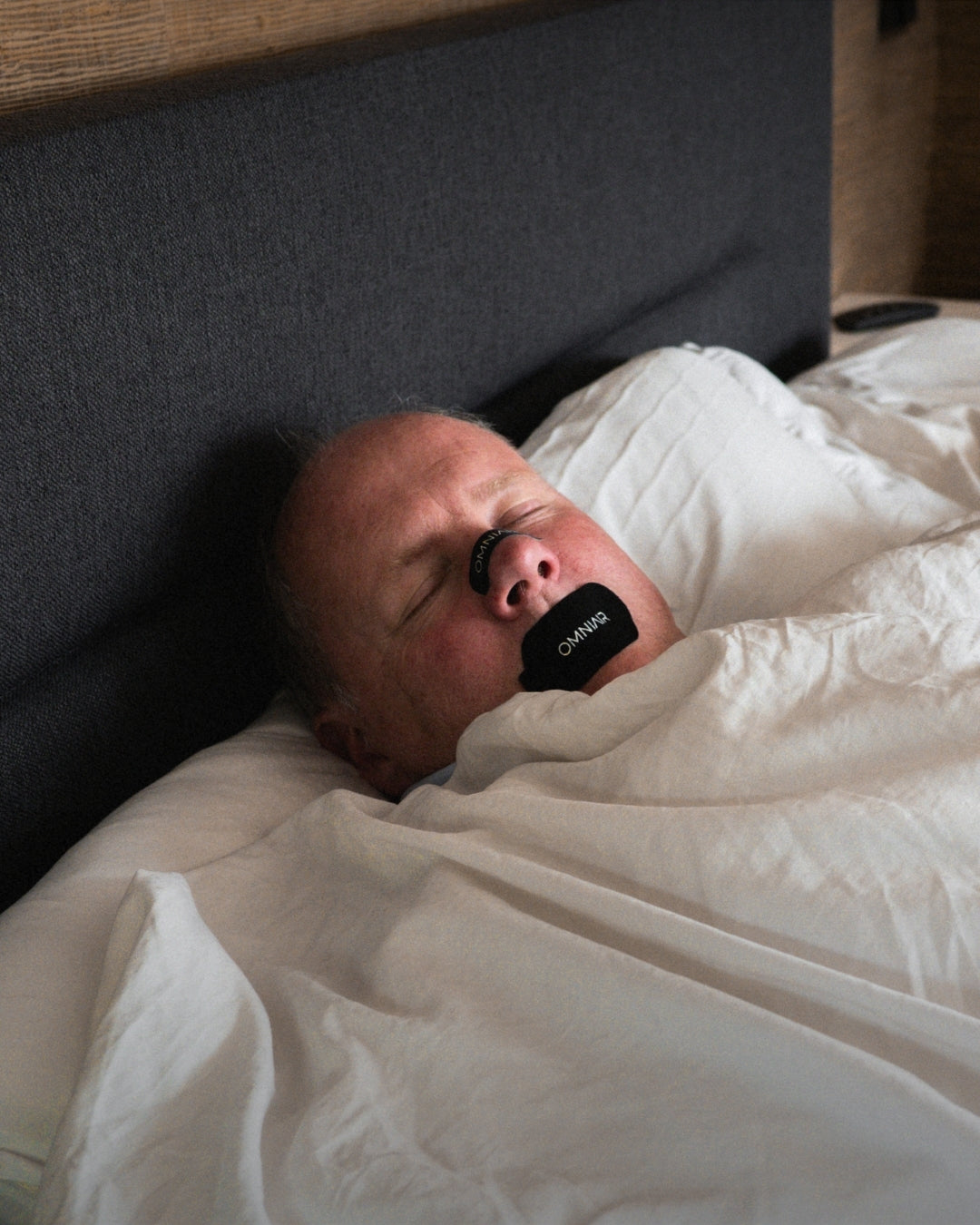
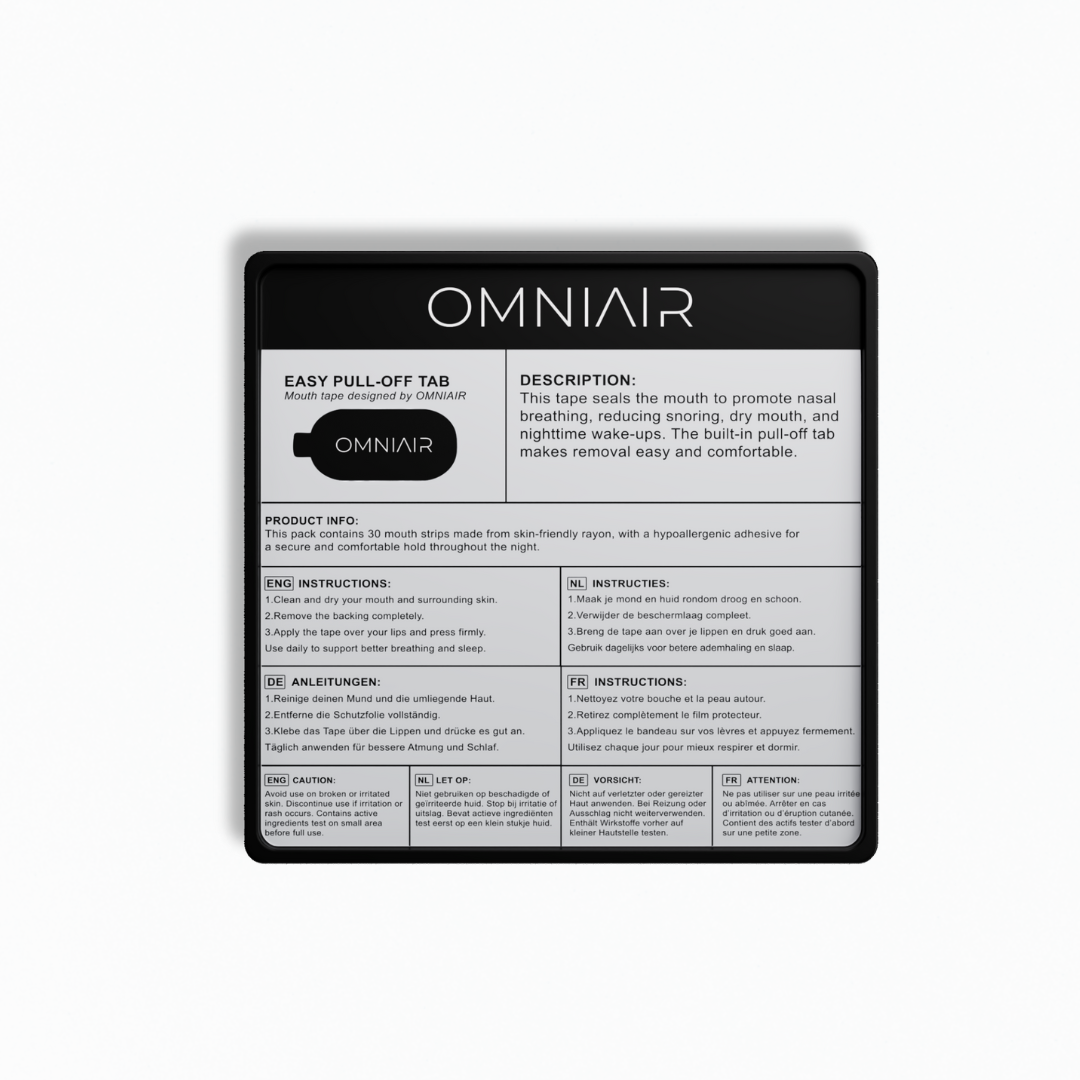
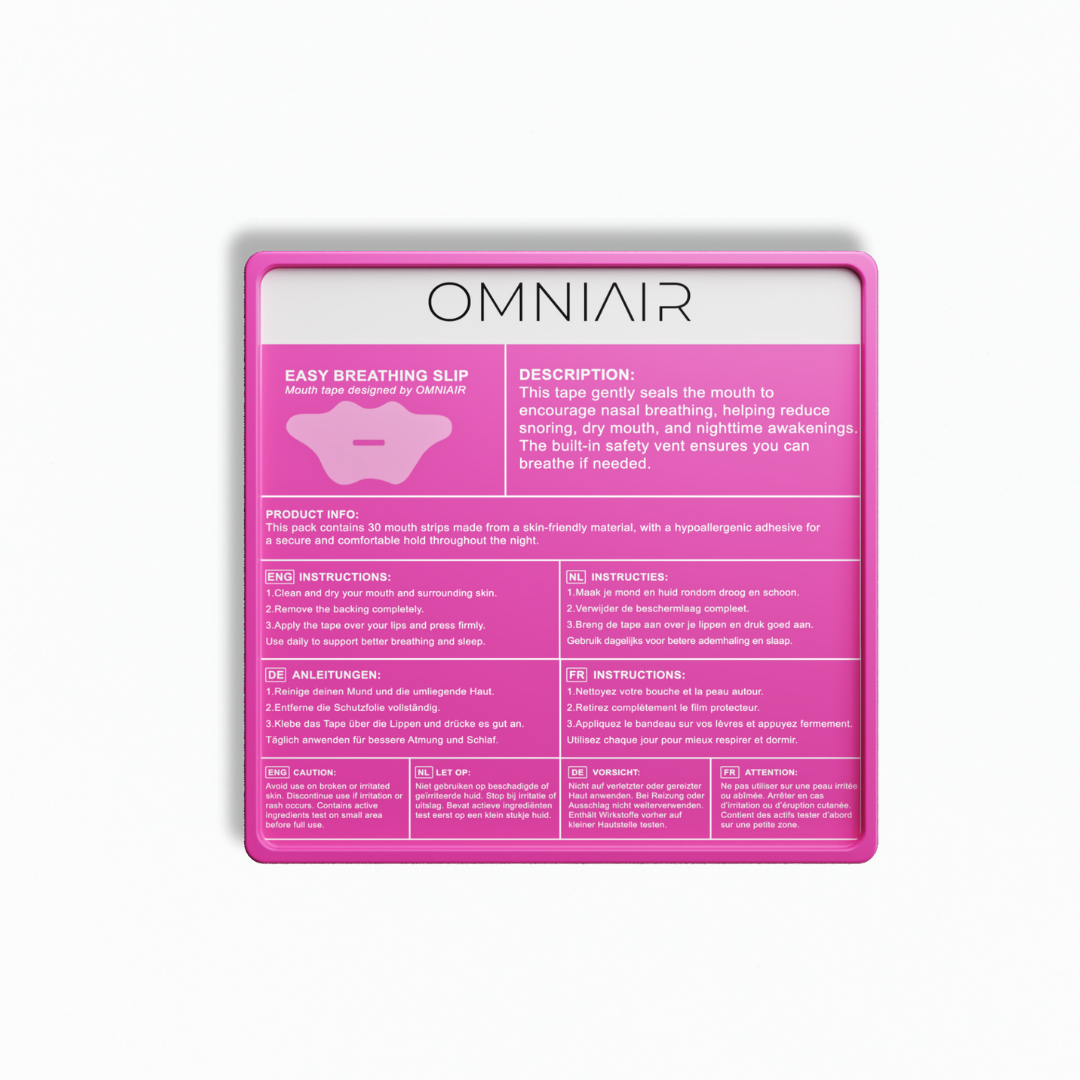
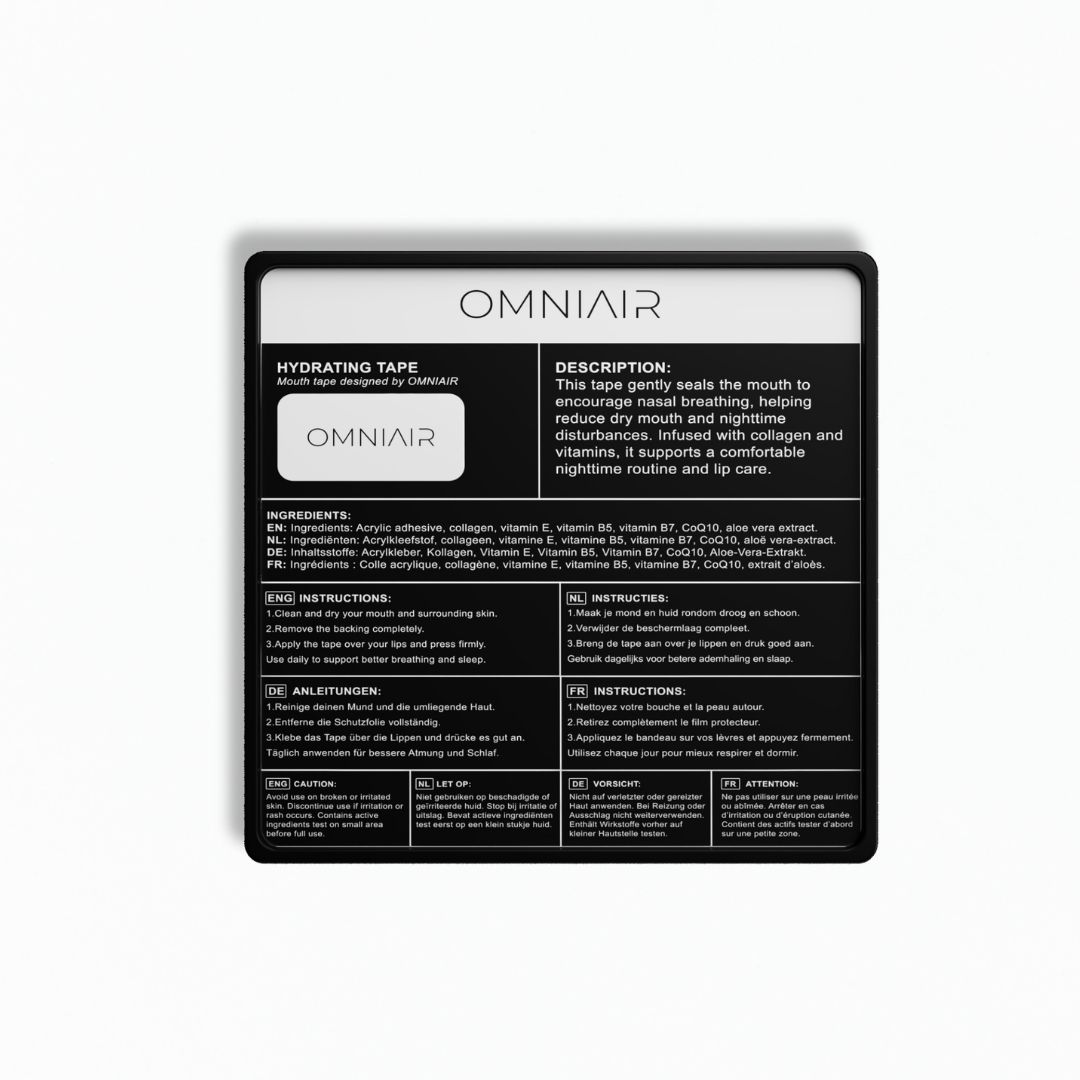
- Combine with mouth tape at night. The recovery benefit of nasal breathing during sleep is well documented. HYROX recovery starts the night before, not race morning.
What a nasal strip won't do for your HYROX
This part matters because brand authority comes from honesty. Here's where the science doesn't support hype:
- It won't increase your VO2max. That's a function of training, genetics, and physiology. A strip can't change it.
- It won't make you faster on stations. Wall Balls and Sled Push performance are about strength, technique, and conditioning. The strip is a breathing tool, not a strength tool.
- It won't replace pacing strategy. The number one cause of HYROX blow-up is starting too fast. No strip fixes that. Only training and discipline do.
- It won't work for everyone. If your nose has a significant structural blockage, the strip's benefit is limited. Address the underlying issue first.
- It's not "40% more airflow". That number is marketing, not science. The real claim is that it reduces nasal valve resistance and stabilises the lateral nasal wall, which has measurable benefits at sub-max intensity. That's enough. We don't need to inflate it.
How OMNIAIR thinks about HYROX
HYROX is the test of recovery, not just fitness. The athletes who finish strong are the ones who treat sleep, breathing, and nervous system regulation as seriously as their training programme. That's exactly what OMNIAIR is built for.
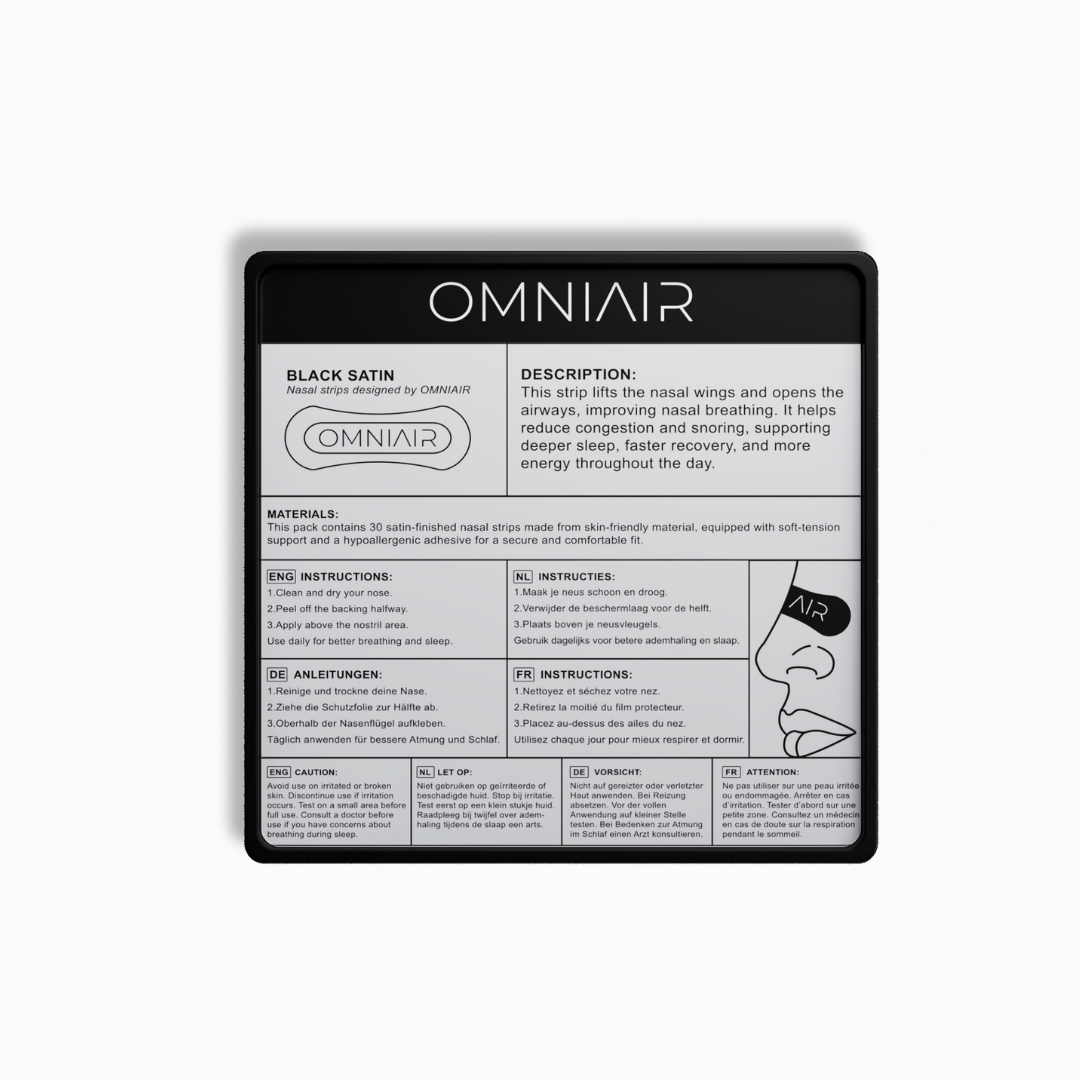
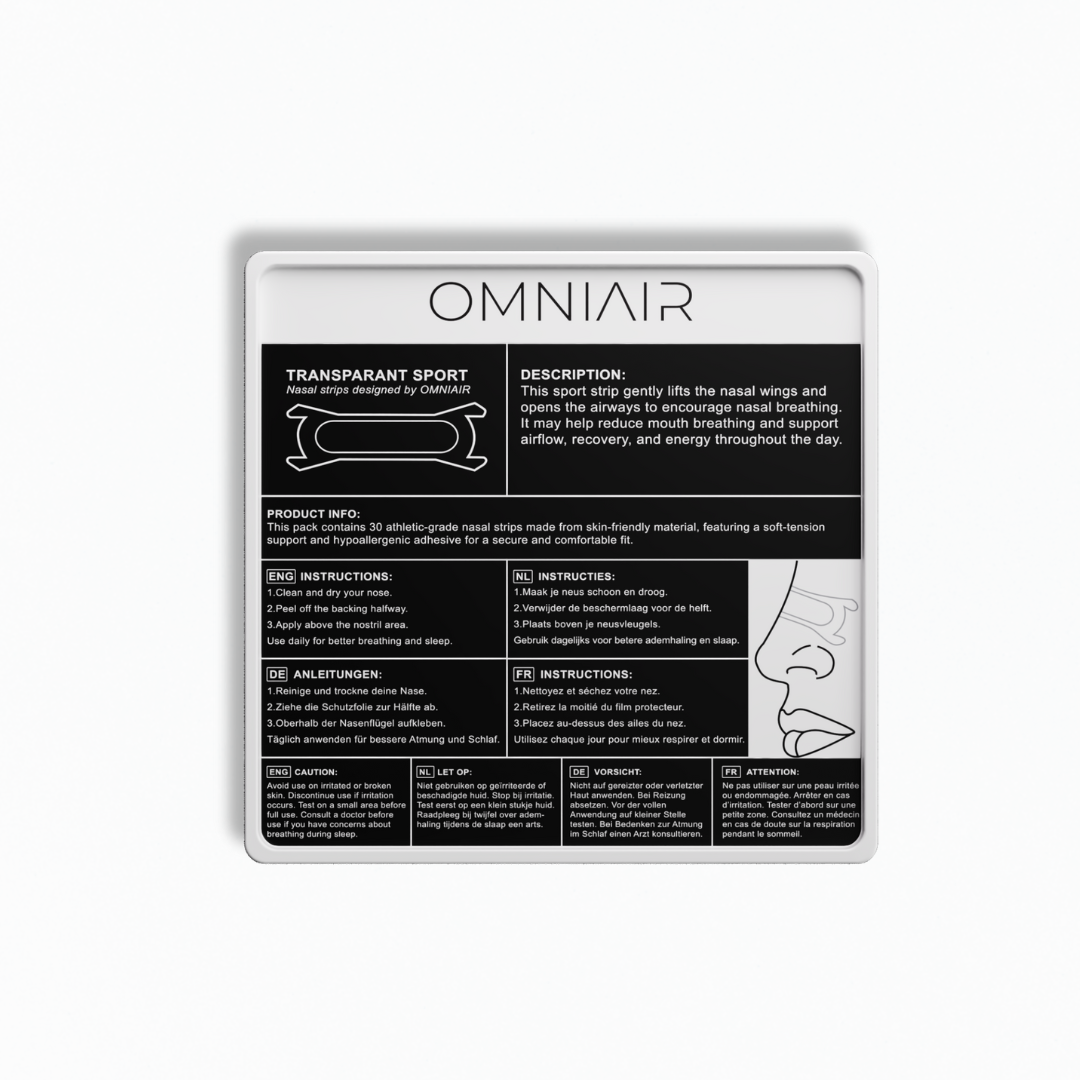
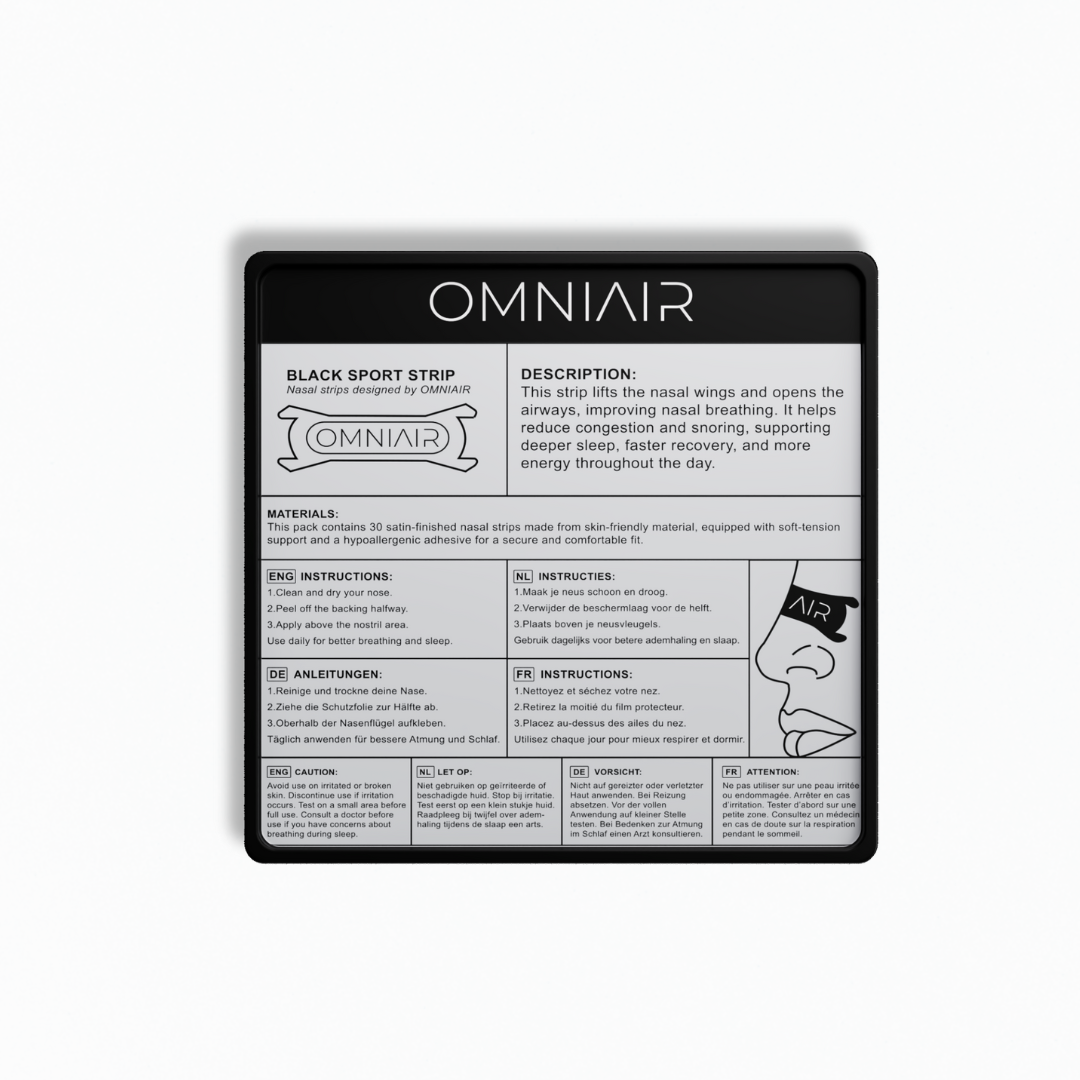
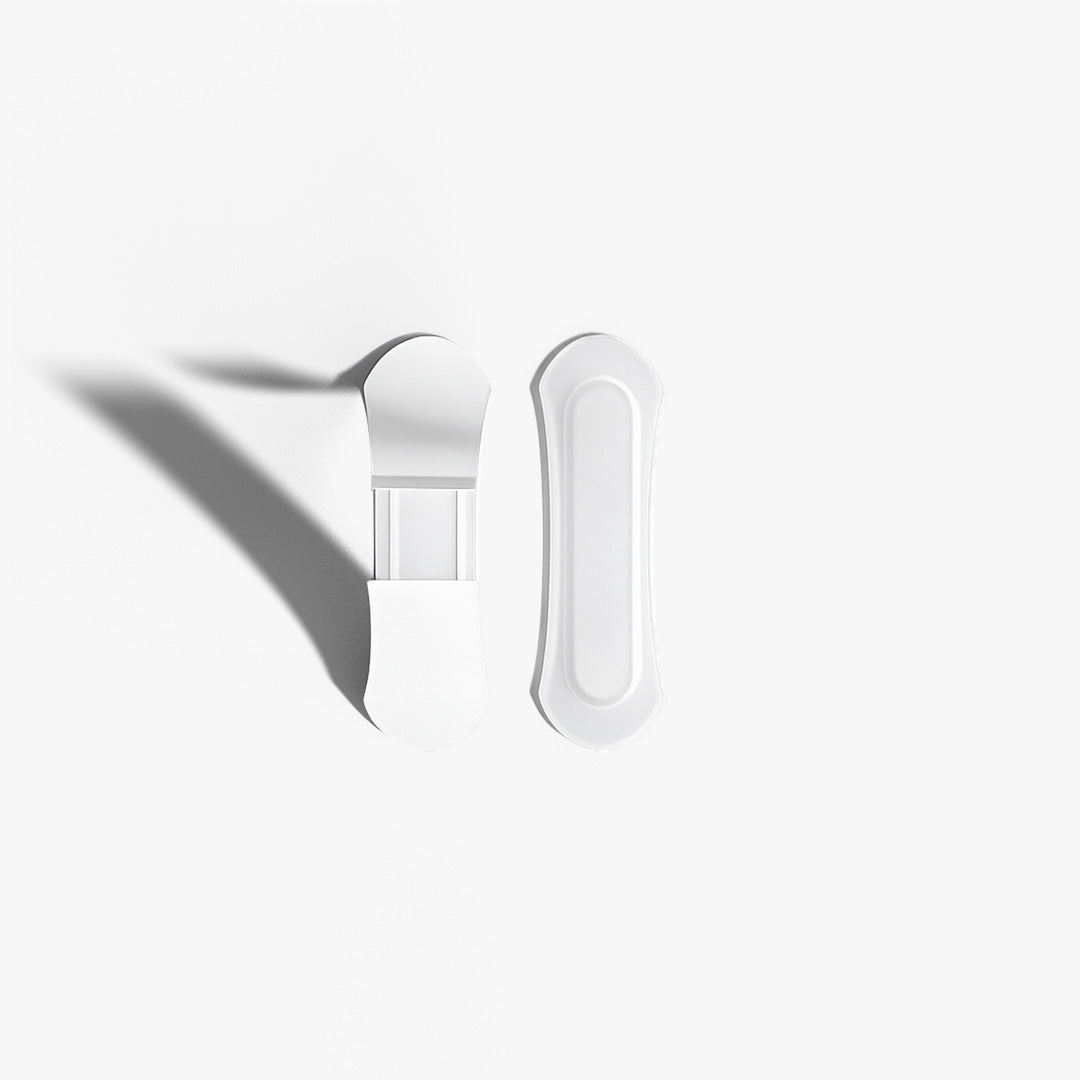
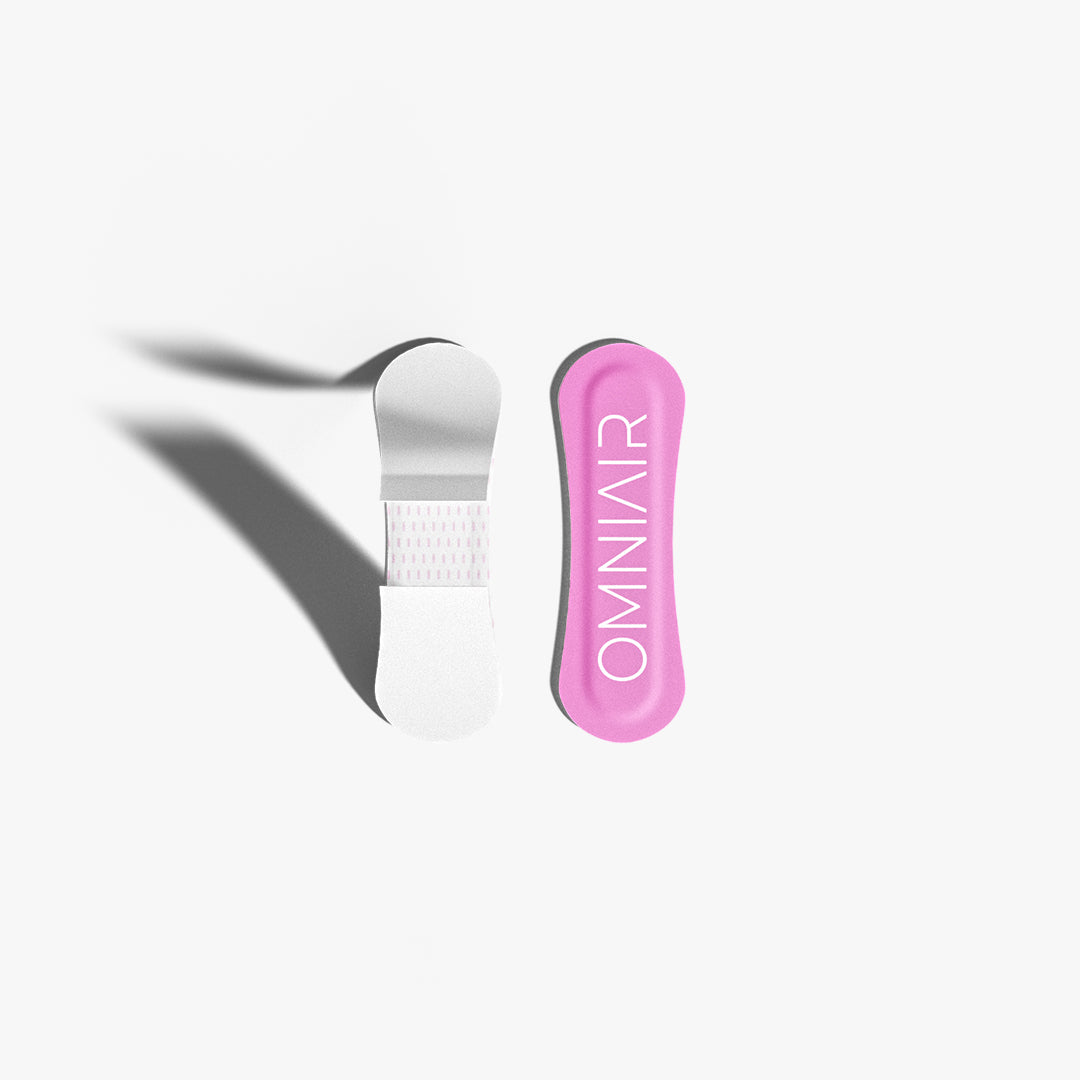
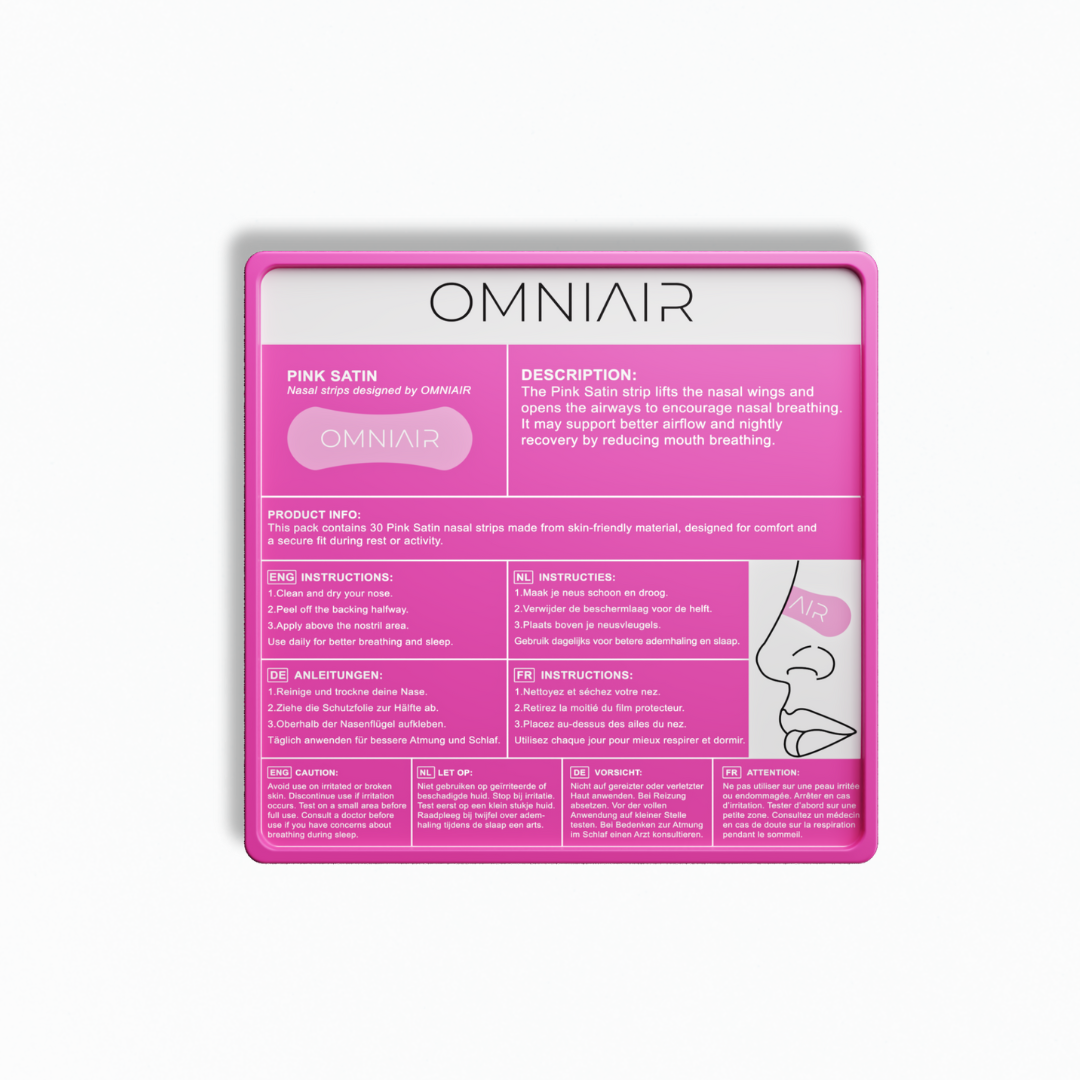
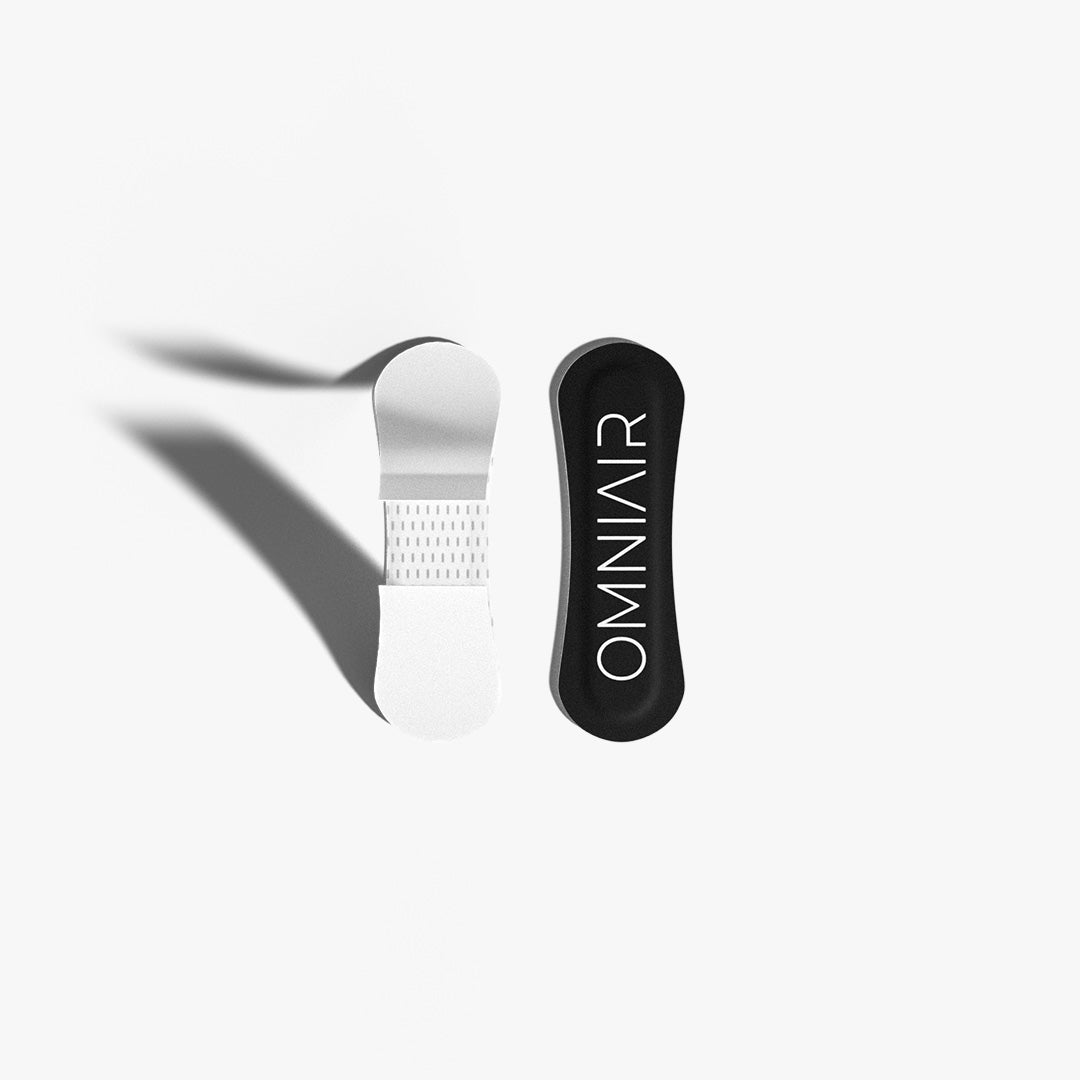
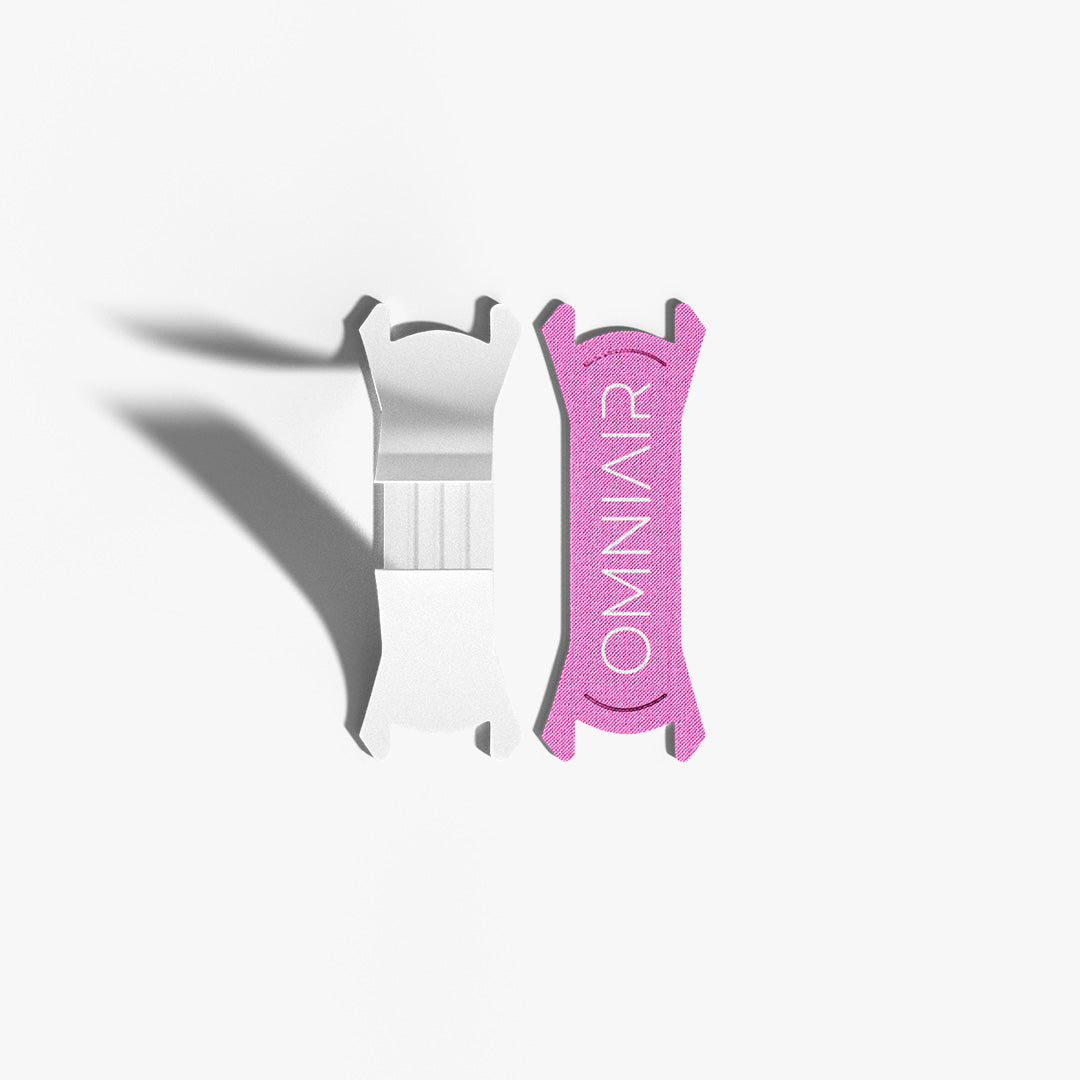
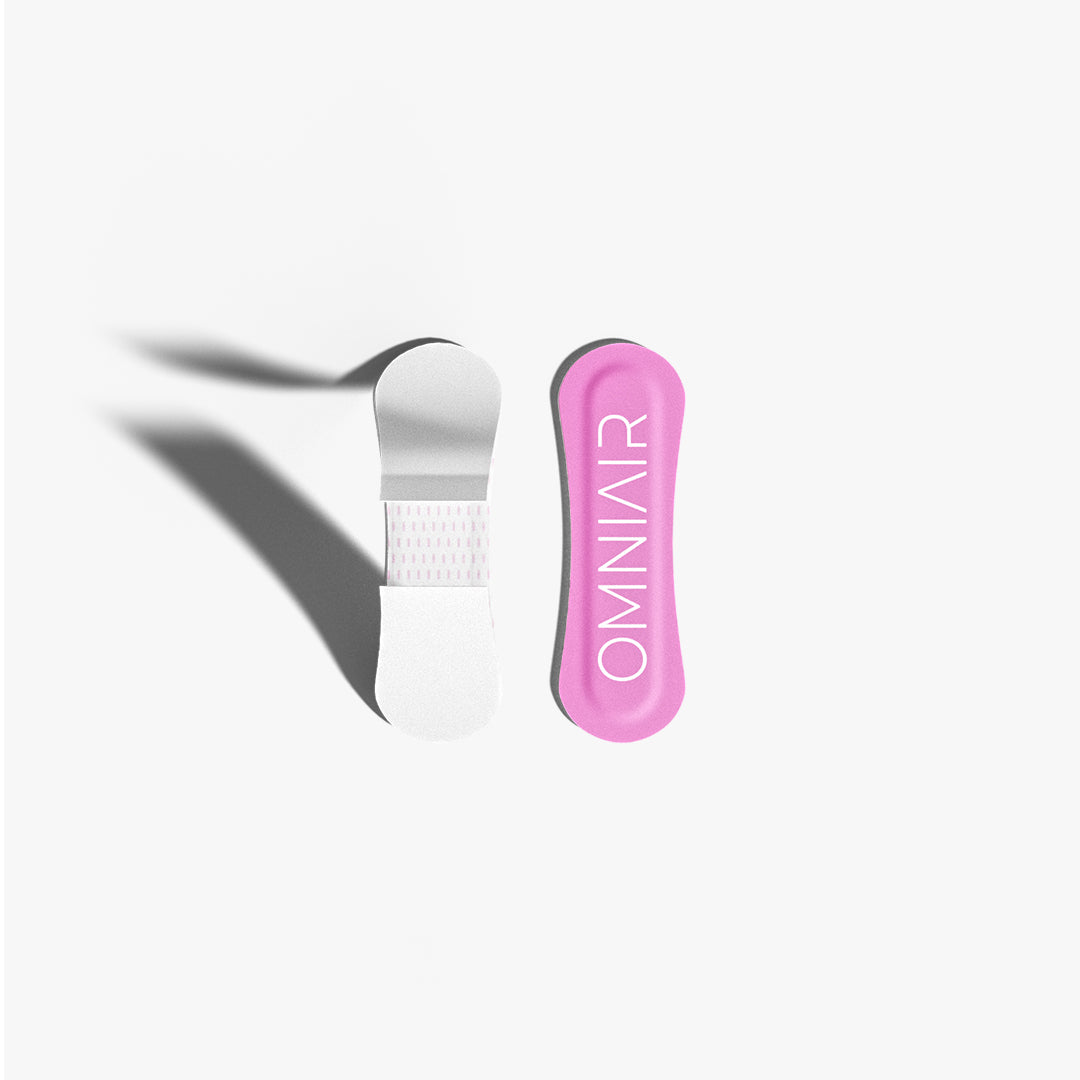
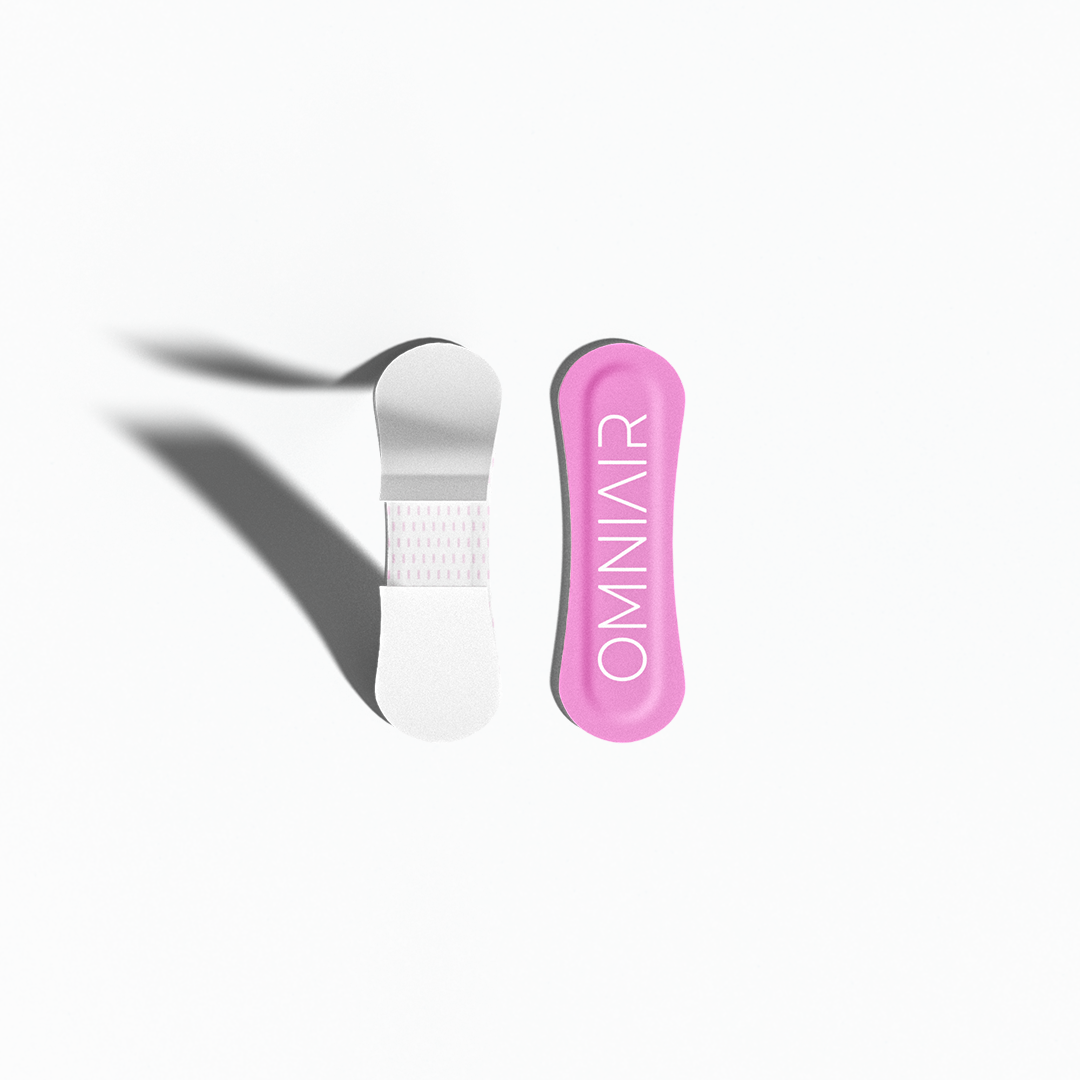
Our Sport Nasal Strips are designed for high-sweat, high-movement athletic conditions. The adhesive is built to hold through the kind of effort HYROX demands. The strip stabilises the nasal valve where research shows 50 to 60% of airway resistance lives. It's a simple mechanical tool with a clear scientific basis.
And the broader stack matters. Mouth Tape protects nasal breathing during sleep, which is where most HYROX recovery happens. The Ice Bath accelerates post-training recovery. The Sleep Mask protects the final sleep cycle when you need it most. These aren't isolated products. They're a recovery system built around the science that makes a difference at HYROX intensity.
The short version
HYROX is a race of breathing efficiency, not just fitness. Peer-reviewed research consistently shows that nasal breathing is more efficient than oral breathing at the moderate to moderate-high intensities where you spend most of your race. It also activates the parasympathetic nervous system faster, accelerating heart rate recovery between stations.
A nasal strip doesn't add anything to your physiology. It removes a mechanical bottleneck (the nasal valve) so you can use the nasal breathing you already have, for longer, under more load. The science is clear on the mechanism. The application to HYROX is logical. The hype claims of "40% more airflow" aren't backed by the data, and we don't make them.
Used during runs and transitions, nasal strips support better ventilatory efficiency and faster between-station recovery. Used during max-effort stations, your body will mouth breathe. That's normal. Don't fight it.
It's a small tool with a measurable mechanism. Not a miracle. Just one more lever in a complete HYROX race-day strategy.
HYROX is won between the stations. Breathing is how you stay in control.
Disclaimer: OMNIAIR products are not medical devices and are not intended to diagnose, treat, cure or prevent any medical condition. If you have a medical condition or health concern, consult a qualified healthcare professional. Nasal strips are a mechanical aid and individual results vary.
Sources
- Schramm, S., et al. (2025). Acute physiological responses and performance determinants in Hyrox – a new running-focused high intensity functional fitness trend. Frontiers in Physiology. https://www.frontiersin.org/journals/physiology/articles/10.3389/fphys.2025.1519240/full
- LaComb, C., et al. (2017). Oral versus Nasal Breathing during Moderate to High Intensity Submaximal Aerobic Exercise. International Journal of Kinesiology and Sports Science, 5(1). https://journals.aiac.org.au/index.php/IJKSS/article/view/3079
- Dallam, G.M., et al. (2018). Effect of Nasal Versus Oral Breathing on VO2max and Physiological Economy in Recreational Runners. International Journal of Kinesiology and Sports Science, 6(2), 22 to 29. https://journals.aiac.org.au/index.php/IJKSS/article/view/4400
- Roithmann, R., Chapnik, J., Cole, P., et al. (1998). Role of the external nasal dilator in the management of nasal obstruction. The Laryngoscope, 108(5), 712 to 715. https://pubmed.ncbi.nlm.nih.gov/9628502/
- Kirkness, J.P., Wheatley, J.R., Amis, T.C. (2000). Nasal airflow dynamics: mechanisms and responses associated with an external nasal dilator strip. European Respiratory Journal, 15(5), 929 to 936. https://erj.ersjournals.com/content/15/5/929
- Zaccaro, A., et al. (2018). How Breath-Control Can Change Your Life: A Systematic Review on Psycho-Physiological Correlates of Slow Breathing. Frontiers in Human Neuroscience, 12, 353. https://doi.org/10.3389/fnhum.2018.00353
- Amirsadri, A., Sedighi, H. (2026). Know Your Nose: A Narrative Review of the Developmental and Functional Impact and Importance of the Nose, Nasal Breathing and Techniques on Health and Emotional Wellbeing. Behavioral Sciences, 16(3), 467. https://doi.org/10.3390/bs16030467
- Morton, A.R., et al. (1995). Comparison of maximal oxygen consumption with oral and nasal breathing. Australian Journal of Science and Medicine in Sport, 27(3), 51 to 55.

Ready to upgrade your recovery?
Science-backed tools, built for athletes who take recovery seriously.
Shop OMNIAIR