Why Men Over 50 Snore More, Sleep Worse, and Feel Tired All Day
The 3am wake-up. The dry mouth in the morning. The energy crash at 2pm. The partner already in the spare bedroom. If this pattern started somewhere after 45, you're not imagining it. Here's what's actually changing in your body, and where a small adhesive strip genuinely fits into the fix.
Most men in their 50s assume the tiredness is just age. The snoring is just part of getting older. The morning fog is what coffee is for. The truth is more specific than that. Your nasal anatomy, your sleep architecture, and your nervous system all shift in measurable ways after 45. And they shift in a direction that breaks sleep quality faster than most people realise.
This blog is about the chain that connects them. Snoring causes sleep fragmentation. Sleep fragmentation causes daytime fatigue. Daytime fatigue causes more coffee, more screen time, and worse sleep tomorrow. After enough years, you don't recognise yourself anymore. The question this blog answers: does the research actually show that a small mechanical fix can break that cycle, or is it just another piece of late-night TV gear?
What changes in your airway after 45
Three things shift simultaneously, and most men don't connect them.
First, your soft tissues lose elasticity. The muscles and connective tissue around your upper airway, including the lateral walls of your nose, naturally weaken with age. This is the same process that affects skin elasticity, but it happens inside your airway too. The result: structures that used to stay open during forceful inhalation start to collapse inward.
Second, your nasal valve becomes more prone to collapse. About 50 to 60% of total airway resistance sits in a small zone called the nasal valve, just inside your nostrils. A clinical study by Roithmann and colleagues in The Laryngoscope demonstrated this using acoustic rhinometry: the nasal valve is the single highest-resistance point in the entire airway. After 45, with reduced tissue support, it collapses more easily during inhalation, especially when you're lying down at night.
Third, you default to mouth breathing more often. When the nasal route gets harder, your body takes the easier path. You wake up with a dry mouth. You snore. Your partner notices. By the time you're 55, the pattern is so established that you don't remember sleeping any other way.
This isn't a small thing. It's the start of a cascade that touches everything else.
The snoring problem is a sleep architecture problem
Snoring isn't just noise. It's the sound of an airway working harder than it should. And the work has real costs.
When you mouth breathe through the night, your sleep architecture changes measurably. You spend less time in deep sleep, the stage where physical recovery actually happens. You spend more time in lighter, fragmented sleep. You wake up briefly dozens of times an hour without remembering any of it. By morning, you've technically been in bed for 8 hours but recovered as if you slept for 5.
This explains the morning fog. The 7am alarm that feels like an attack. The first hour of coffee just to feel normal. It's not laziness. It's not "getting old". It's a sleep architecture that's been quietly degrading for years.
A 2018 systematic review by Zaccaro and colleagues in Frontiers in Human Neuroscience concluded that slow, controlled nasal breathing activates the parasympathetic nervous system, the recovery side of your autonomic system. Mouth breathing, especially at night, keeps you in sympathetic-dominant mode. Higher heart rate. Higher cortisol overnight. Less actual recovery from the same hours in bed.
For a 50-year-old man, this matters more than it did at 30. Your body has less recovery capacity in absolute terms. Wasting half of your sleep on a sympathetic-dominant nervous system is the difference between feeling 50 and feeling 65.
The afternoon energy crash is connected
Most men over 50 know the 2pm crash. The post-lunch brain fog. The reach for coffee or sugar. The reason it's gotten worse over the years is not just about diet.
When your overnight recovery is degraded, your body runs on lower glycogen reserves and higher baseline cortisol the next day. Your circadian rhythm becomes less stable. Your hunger and energy signals get blunted. By 2pm, you're not just tired from your morning. You're tired from years of sleep that wasn't doing its job.
A 2026 narrative review by Amirsadri and Sedighi in Behavioral Sciences synthesised 70 studies on nasal breathing and concluded that nitric oxide produced in the sinuses, with concentrations up to 30,000 parts per billion, improves pulmonary oxygenation by up to 18% in some studies. When you mouth breathe through the night, you skip that entire system. Multiply that small efficiency loss across decades and the cumulative cost is real. Your daytime energy levels are partly a downstream effect of how well your body oxygenates overnight.
The partner problem
This part doesn't get enough honest conversation. By 50, a lot of marriages have a sleep arrangement that started as "your snoring is keeping me up" and gradually became "we sleep better in separate rooms".
That's not a small thing. Shared sleep is part of the architecture of a long relationship. When it goes, something quiet but real is lost. Most men accept it as inevitable. It usually isn't.
Heavy snoring almost always traces back to airway resistance. When the nasal valve collapses during inhalation, air has to be forced through a narrowed passage, vibrating the soft palate. That vibration is the snore. Open the nasal valve mechanically, and the airflow normalises. In many cases, the snoring drops significantly.
This isn't a medical claim. Severe sleep apnoea is a different condition and needs medical evaluation. But for the majority of men whose snoring is primarily mechanical, a properly applied nasal strip changes something real.
Where a nasal strip actually fits in
So we've established four things. Your nasal valve gets more prone to collapse after 45. That collapse drives mouth breathing overnight. Mouth breathing degrades your sleep architecture. Degraded sleep cascades into daytime fatigue, mood, and relationship friction.
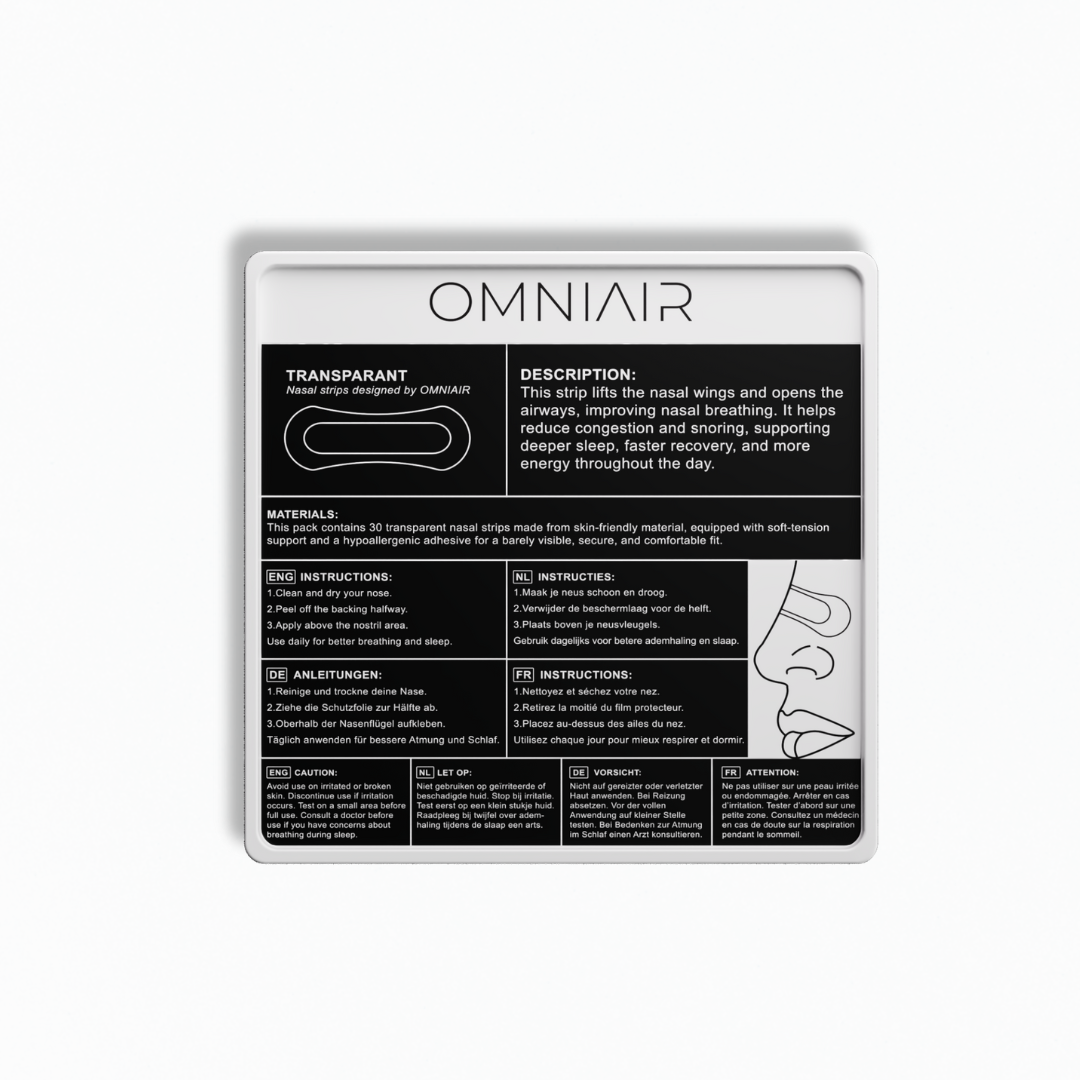
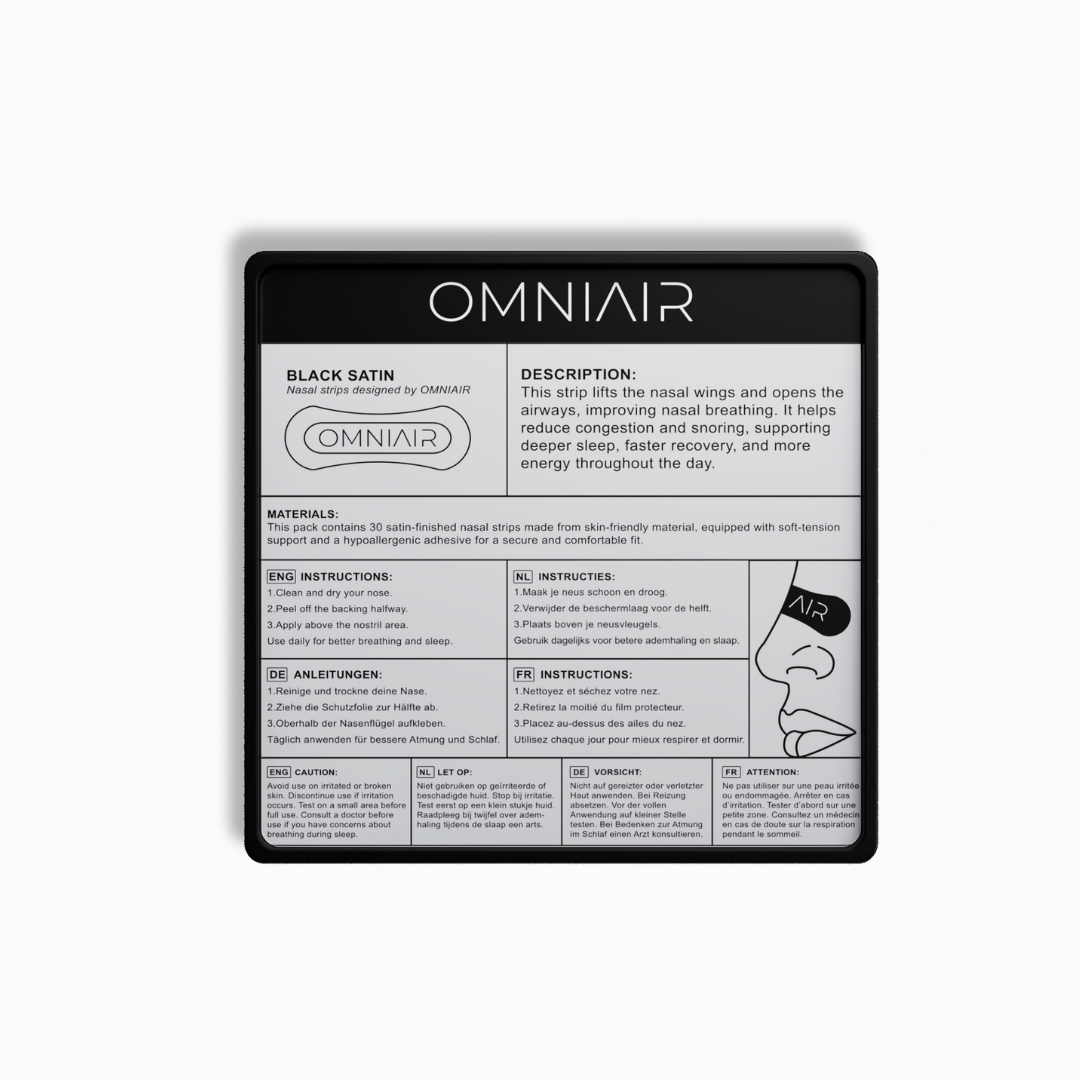
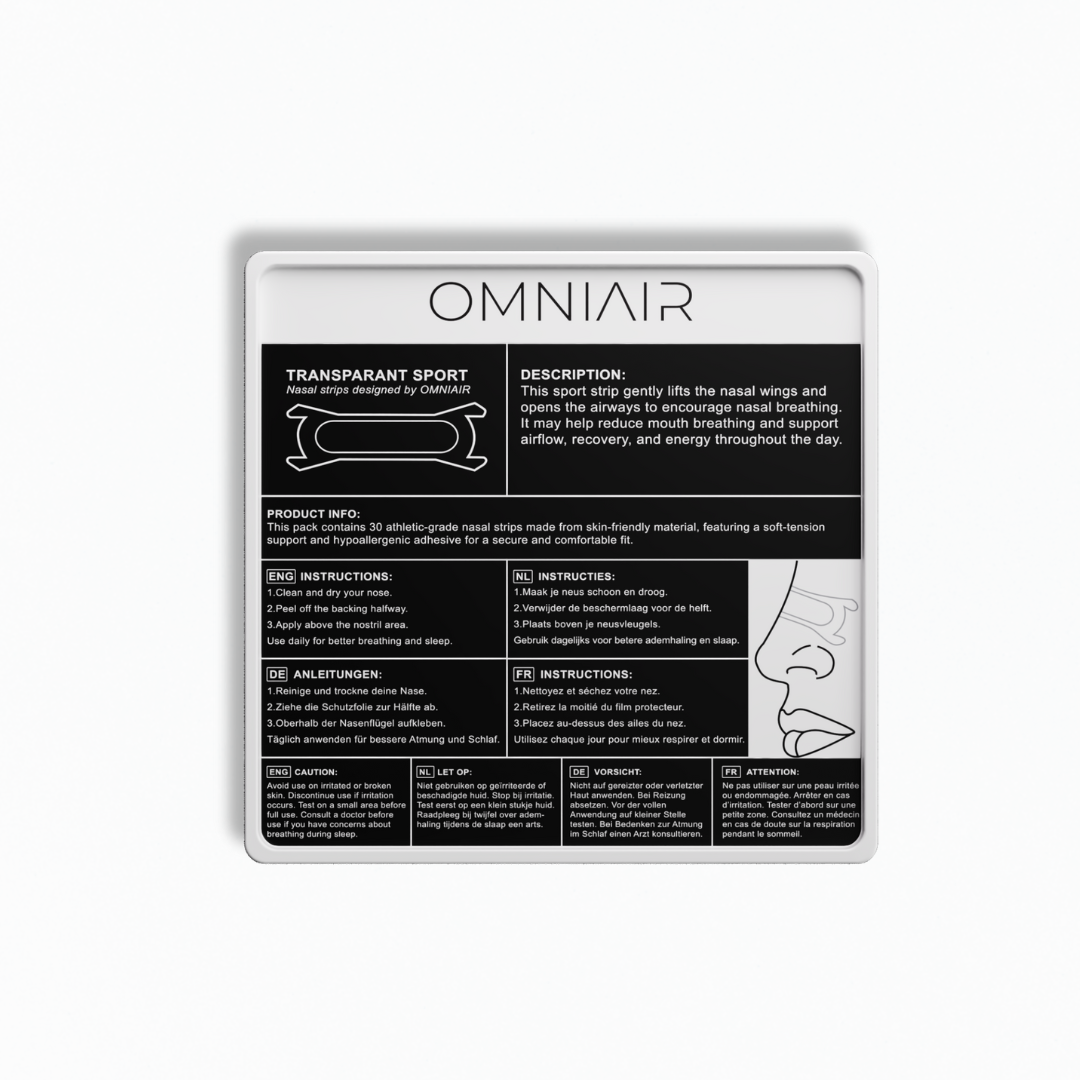
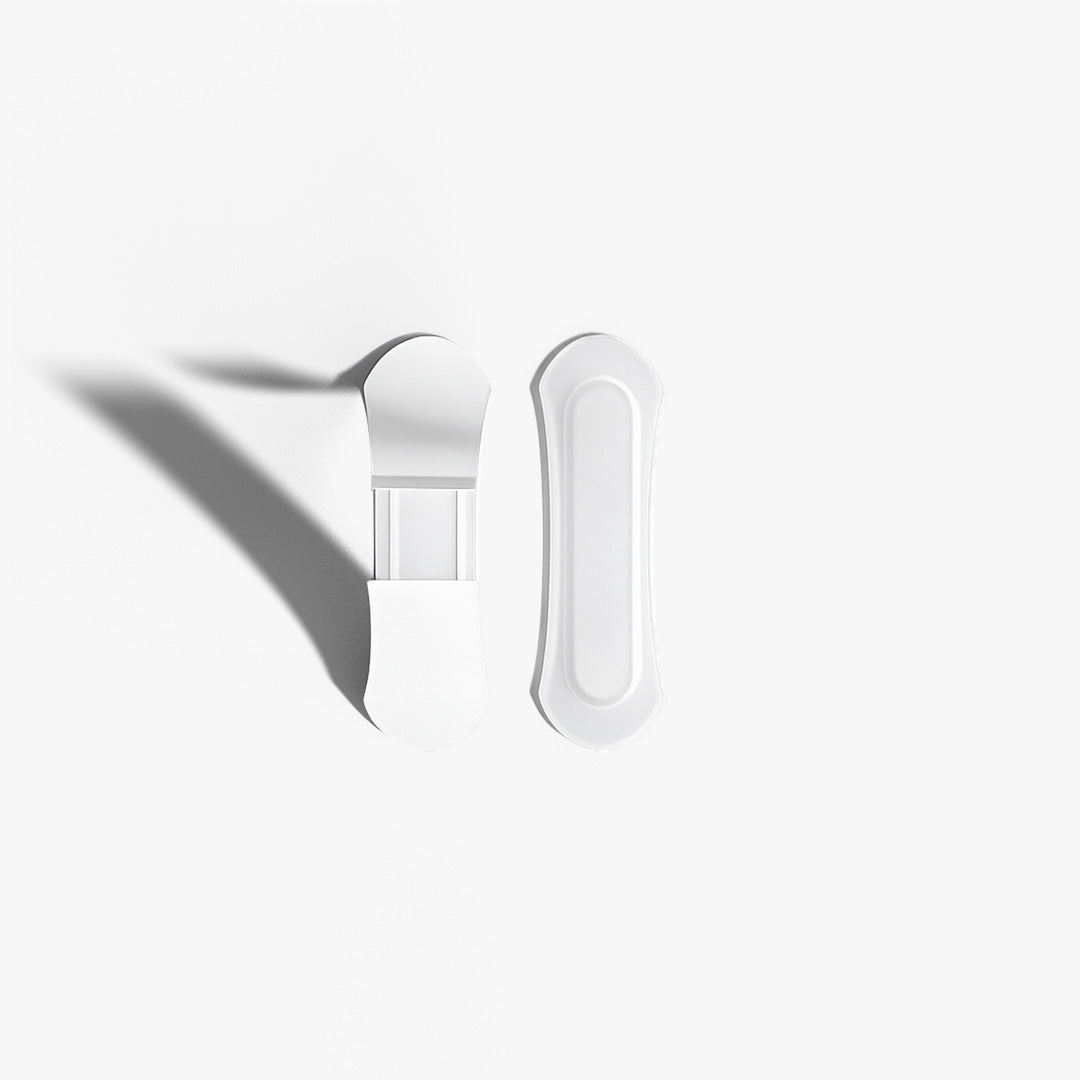
Roithmann's clinical study measured exactly what an external nasal strip does: it significantly increases the minimum cross-sectional area of the nasal valve and reduces airflow resistance. A 2000 study by Kirkness and colleagues in the European Respiratory Journal confirmed the mechanism: the springy bands stabilise the lateral nasal walls so they don't collapse during forceful inhalation.
Translation for a man over 50: a nasal strip doesn't change your physiology. It restores a mechanical function that's been degrading for years. Your body knows how to nasal breathe. The strip just removes the structural barrier that's making it harder.
For most men, the effects appear within the first three nights:
- Less snoring. Partner notices first, usually.
- Less dry mouth in the morning. You wake up without the cotton-throat feeling.
- Deeper sleep. You feel more rested after the same hours in bed.
- Steadier daytime energy. The 2pm crash softens after a week or two.
- Better mood. Downstream effect of better recovery. Subtle but real.
What a nasal strip does not do
Be realistic.
- It doesn't treat sleep apnoea. If you stop breathing during sleep, gasp awake, or your partner notices long pauses, see a doctor. Sleep apnoea is a separate condition that needs medical management.
- It doesn't make you 30 again. Energy, recovery, and sleep all change with age. A strip restores what's available, not what's gone.
- It doesn't fix bad sleep habits. Late screens, alcohol after 8pm, irregular bedtime, all still matter. A strip works best alongside basic sleep hygiene, not as a substitute.
- It doesn't help severe nasal blockage. Deviated septum, polyps, chronic sinusitis: these need medical evaluation. A strip helps with mechanical valve collapse, not structural problems.
The value sits in restoring nasal-dominant breathing overnight, reducing the snoring that comes from mechanical valve collapse, and supporting better sleep architecture. That's the entire pitch. For most men over 50, it's enough.
How to test it
Give it a real trial. Most men feel partial effects on the first night and full effects within a week.
Start with 7 nights in a row. Apply the strip to clean, dry skin about 15 minutes before bed. Take note of three things in the morning: dry mouth or not, how rested you feel, and whether your partner noticed less snoring. Keep doing it for two weeks. Most patterns become clear in that window.
If after two weeks nothing has shifted, the issue might not be mechanical valve collapse. That's useful information too: it means it's worth getting your airway evaluated for other causes.
The OMNIAIR standard
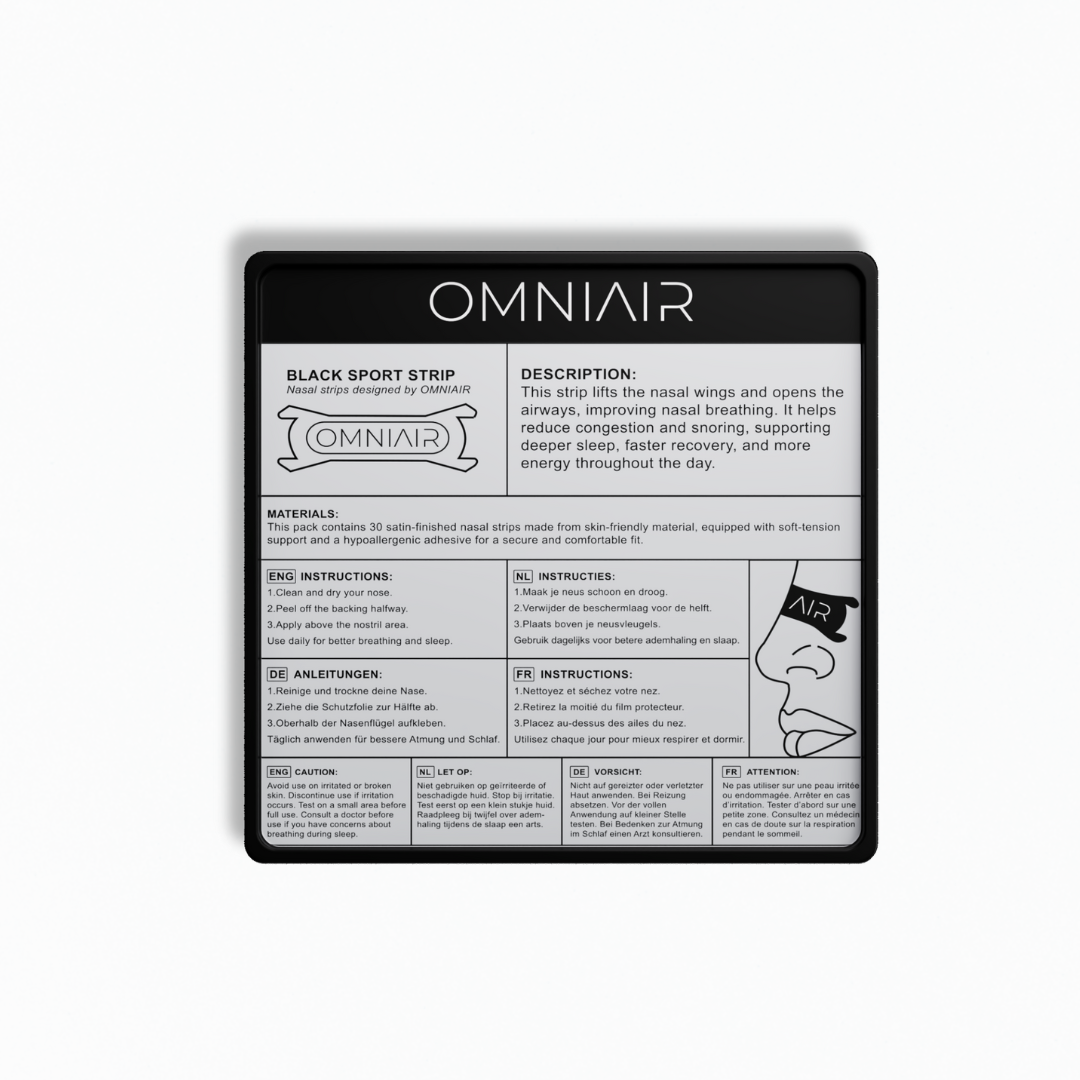
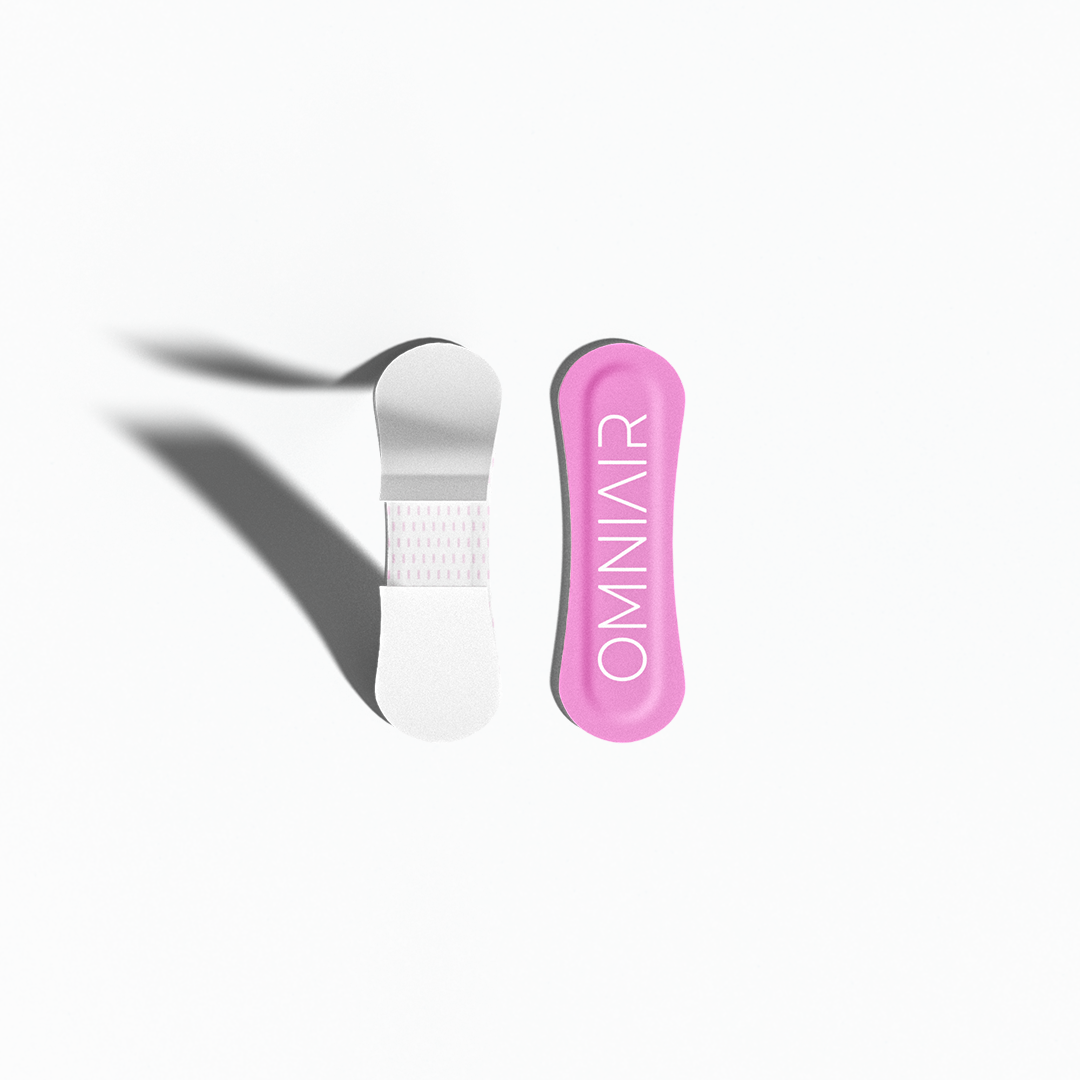
OMNIAIR isn't a cheap drugstore strip. It's a precision-engineered tool built for men who take their health seriously, not just for snorers looking for a quick fix.
Built for nightly use, not occasional relief:
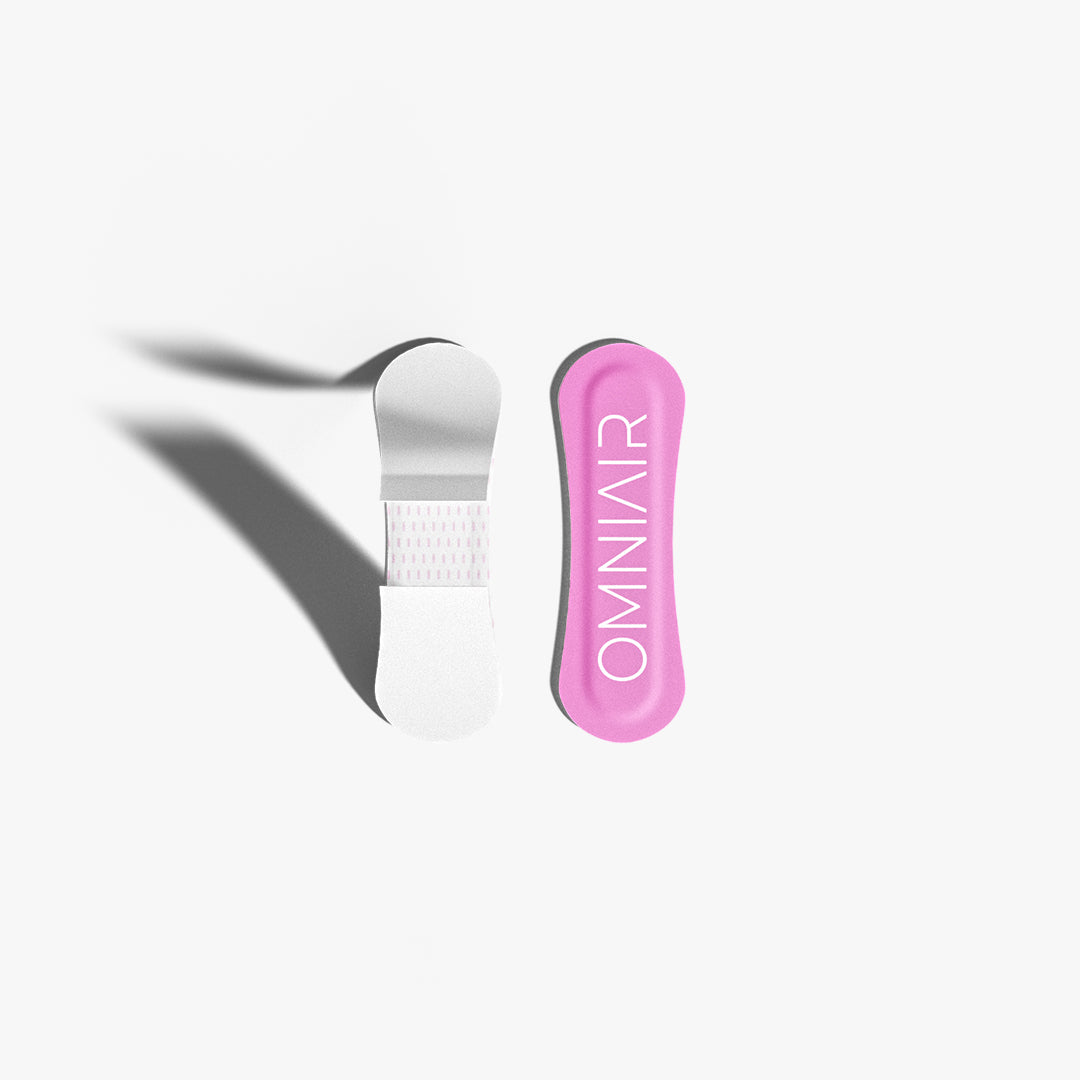
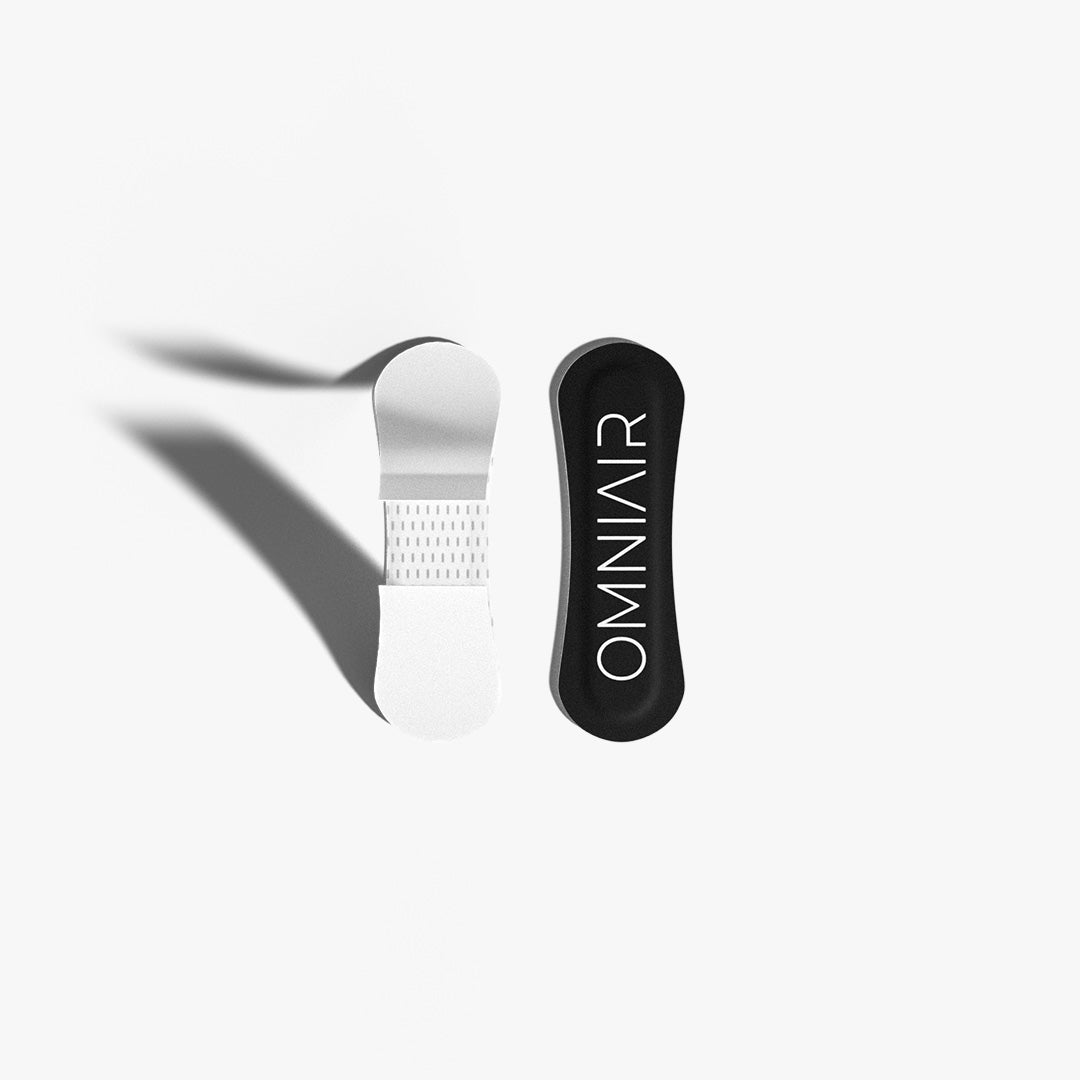
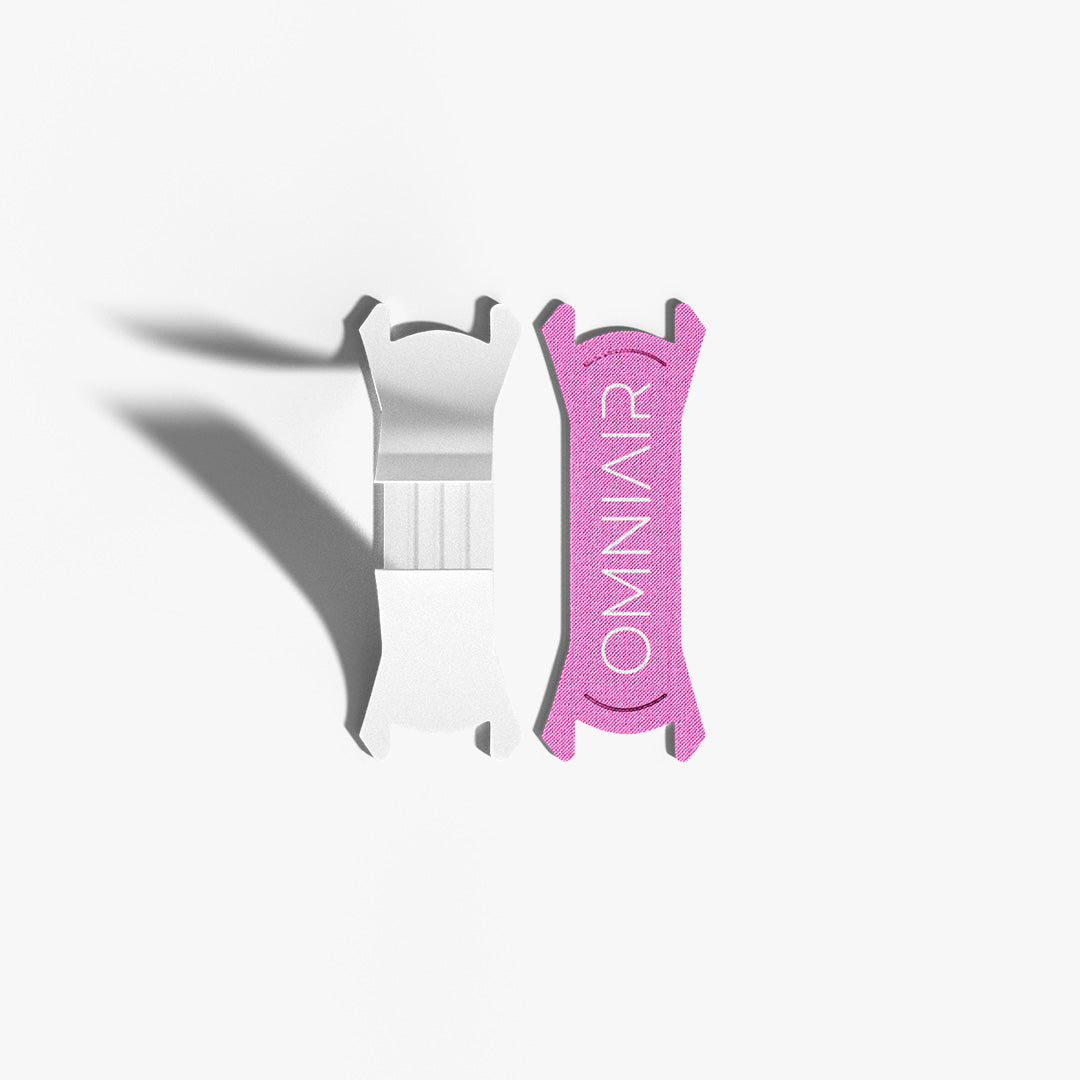
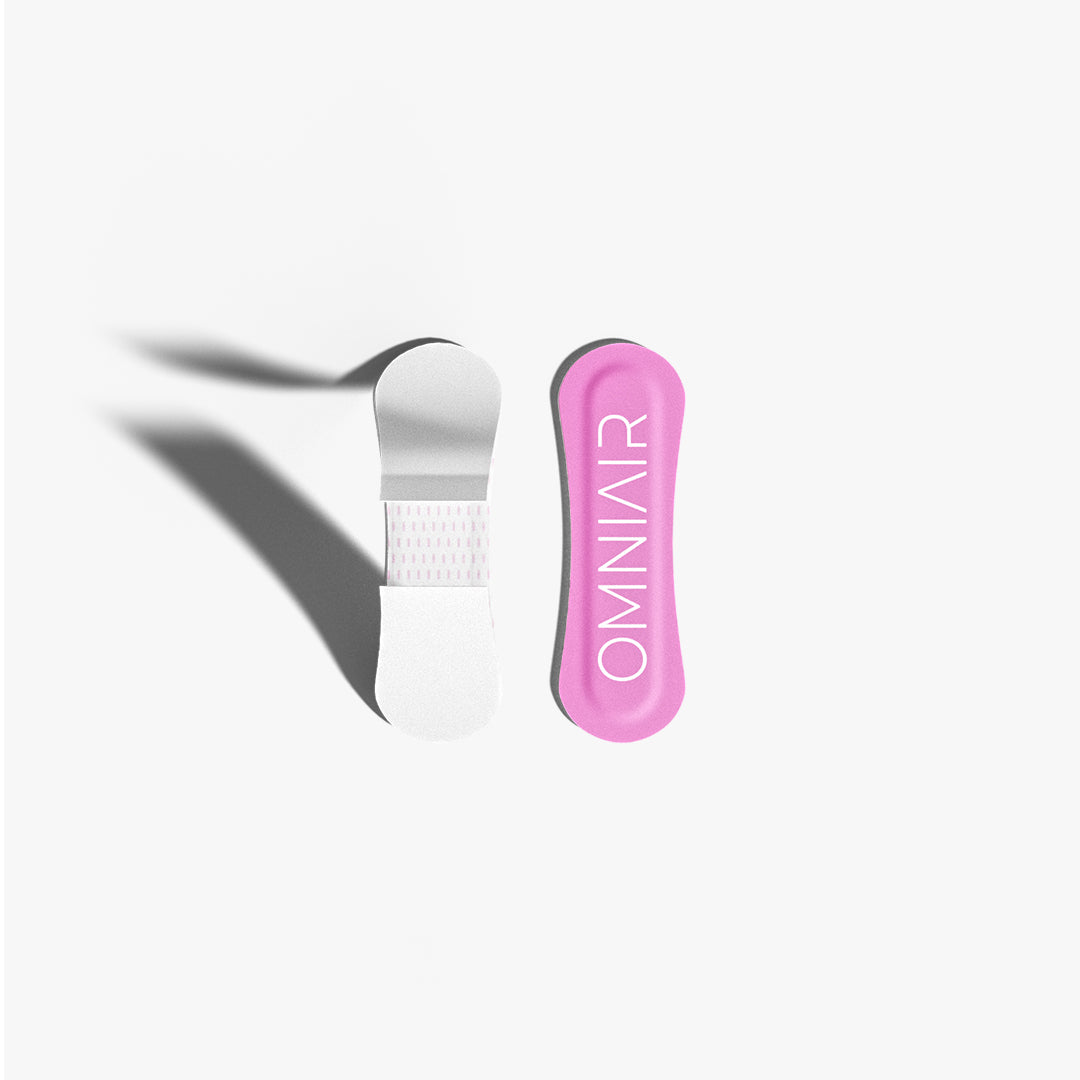
- Maximum nasal valve opening. The spring-band tension is calibrated to lift the lateral nasal walls fully, opening the cross-sectional area without uncomfortable pressure that wakes you up.
- Holds the entire night. Medical-grade adhesive bonds to skin and holds for 7+ hours. No mid-night peeling, no waking up with the strip on your pillow.
- Zero pressure on the nasal bridge. No painful pressure point, no skin marks in the morning.
- Works with skincare. Apply to clean, dry skin first and the rest of your routine layers on without issue.
- Clean removal. Peels cleanly in the morning without taking skin or leaving residue. Daily use without irritation.
- Designed for results, not noise reduction alone. Most drugstore strips were built for one purpose: stop the noise. OMNIAIR is built for sleep architecture, autonomic recovery, and overnight oxygenation. Quieter nights are the side effect, not the goal.
This is what separates OMNIAIR from generic pharmacy strips: every design decision is made for the full night, not the first hour. It's a small thing. But in a body that's changing, small things compound. After 30 nights, you don't just feel less tired. You feel like yourself again.
You can't get your 30s back. But you can stop losing your 50s to a problem that has a mechanical fix. Sometimes that's all the difference you need.
Sources
- Roithmann, R., et al. (1998). Effects of external nasal dilator strips on nasal patency: acoustic rhinometry measurements. The Laryngoscope. https://pubmed.ncbi.nlm.nih.gov/9628502/
- Kirkness, J.P., et al. (2000). Mechanical action of external nasal dilator strips on the upper airway. European Respiratory Journal, 15(5), 929-936. https://erj.ersjournals.com/content/15/5/929
- Zaccaro, A., et al. (2018). How Breath-Control Can Change Your Life: A Systematic Review on Psycho-Physiological Correlates of Slow Breathing. Frontiers in Human Neuroscience, 12, 353. https://doi.org/10.3389/fnhum.2018.00353
- Amirsadri, A., & Sedighi, S. (2026). The physiological and psychological effects of nasal breathing: A narrative review of 70 studies. Behavioral Sciences. https://doi.org/10.3390/bs16030467
- Dinardi, R.R., et al. (2021). External nasal dilators do not improve maximal oxygen uptake during aerobic exercise: A systematic review and meta-analysis. https://pubmed.ncbi.nlm.nih.gov/34286410/

Ready to upgrade your recovery?
Science-backed tools, built for athletes who take recovery seriously.
Shop OMNIAIR